Treasures

Dublin held many treasures for me on my quest to dig deeper into Dora’s story. In terms of family members, I found out more about Henry William Greene (d. 1868, Dora’s grandfather). He was an engineer working on the Vartry Reservoir scheme, County Wicklow, to bring fresh water to Dublin’s growing population. He fell off a wall at Glendalough and died of his injuries, leaving a wife and 13 children. The 14th child was born three weeks later.
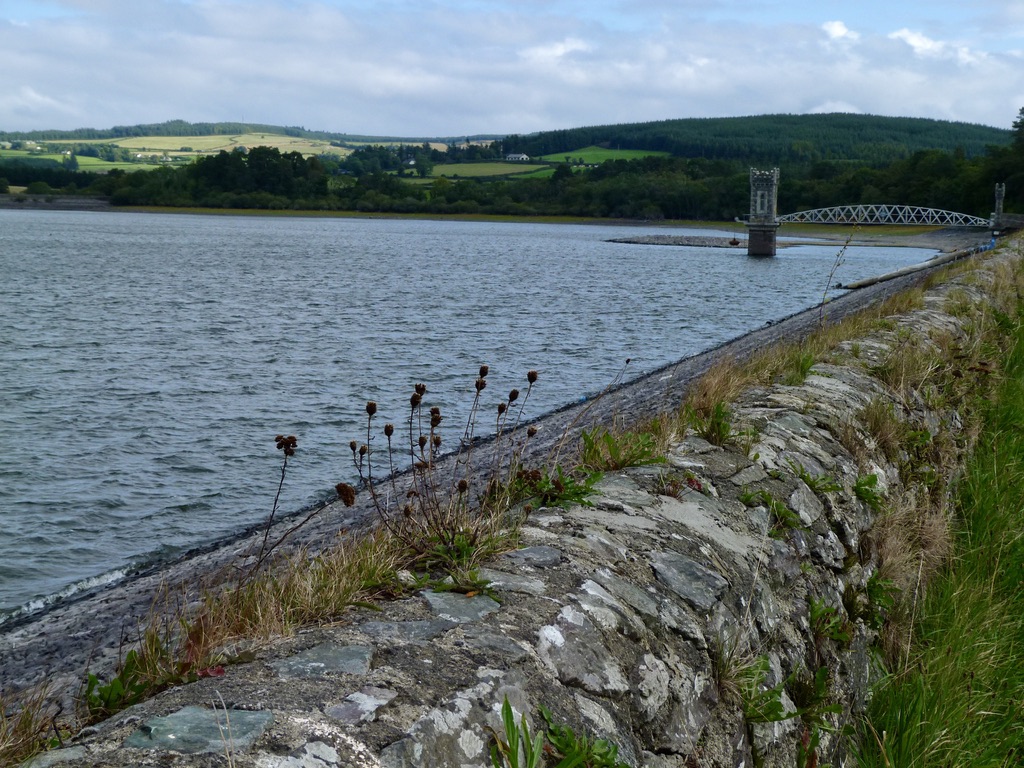
Vartry Lower Reservoir with draw off tower

Henry W was buried at Mount Jerome and was joined by three of his children – Charles (d 1890), Gertrude (d 1940) and Henry R (d 1940, father of Norah). I went and met them all and left some flowers.

Grave of Henry Wm Greene, Mount Jerome

It turns out that Robert Barton (Bartons had owned the Glendalough estate since the 1830s) was a great friend of Dr Dorothy Stopford Price of St Ultan’s Hospital, with whom Dora would work on the BCG vaccination programme. Both were republicans seeking to free Ireland of British rule. Barton wrote to Dr Price in December 1921, after signing the Anglo-Irish Treaty creating the Free State, an ugly compromise that led to civil war.
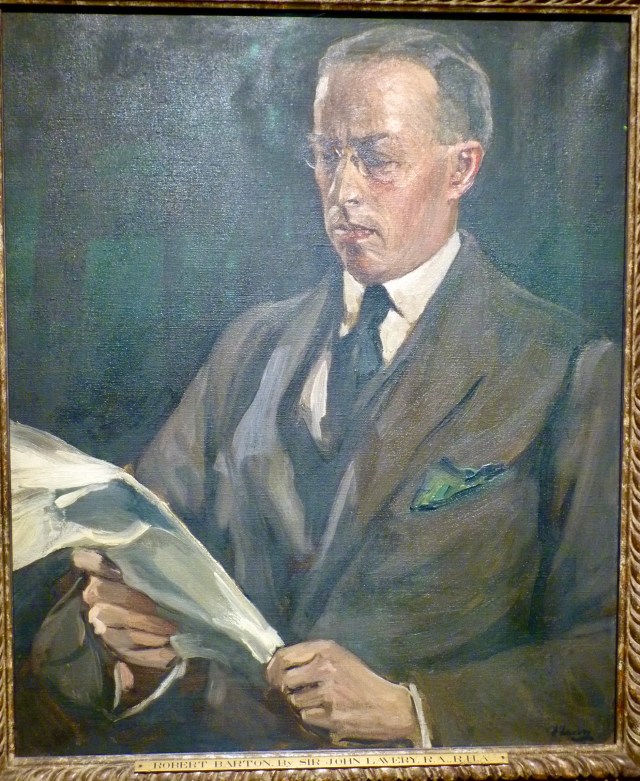
Robert Barton by John Lavery

“It’s a sad story because success was in our grasp at one time, at any rate I believe it was, provided all leaders and people had been prepared to take the gamble and risk all for the ideal. Well the opportunity has gone now and will not return in our lifetimes, but that the provisional government under the leadership of the pro-ratification party, will be either successfully happy or long lived, I doubt. For myself I retire to home and oblivion.” (27 Dec 1921, accessed at National Library of Ireland).

Correct on all counts, except that Ireland became a republic in 1949, during Barton’s lifetime. 1949 was also the year that Dorothy Stopford Price’s BCG vaccination programme went national, increasing from a few local patients to a programme to vaccinate all infants, children, young adults and frontline staff – about 18,000 people in the first eighteen months. I didn’t find specific reference to Dora, but the National BCG Commmittee report for 1950 mentions her manager at the Dublin office, Mr Patterson, who earns praise for his ingenuity and advice in setting up the data for recording on punch cards. I suspect Dora was the top level contact and saleswoman and left the details to her staff.
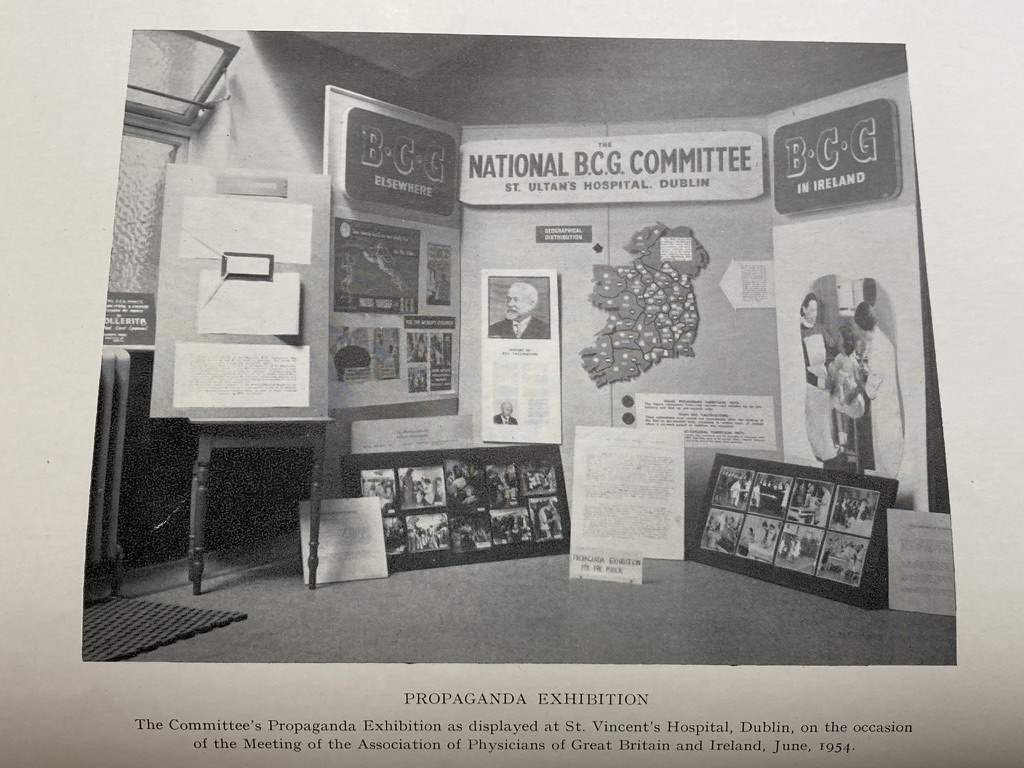
BCG vaccination propaganda

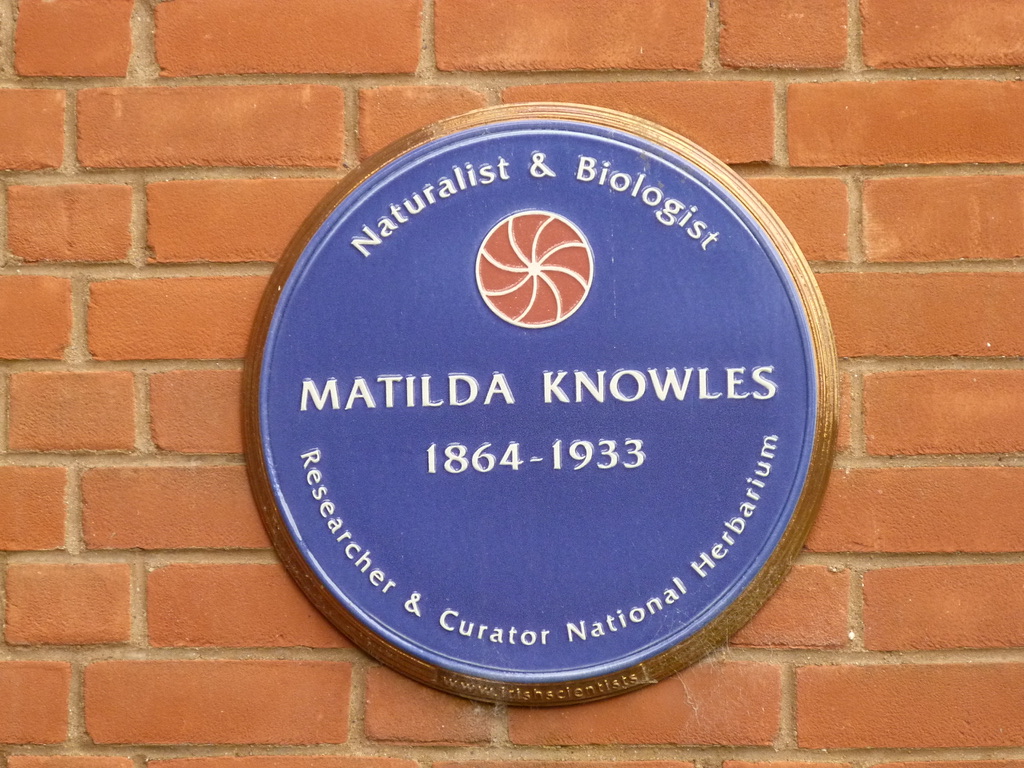
Deansgrange cemetery (best café in town by the way) has the grave of Matilda Knowles, the renowned botanist with whom Dora stayed in Dublin in 1917-19. Her great work was on the lichens of Ireland and it seemed apt that her grave is now covered in mosses and lichens! Her apartment was a gathering place for Dublin’s intelligentsia, where Dora made many friends and useful contacts, including her business partner Sam Haughton, who was from the same village as Matilda. Matilda is honoured at the Botanic Garden, with a plaque and a brief history of her work, at the herbarium.
Another friend that Dora met at Matilda’s apartment was stained glass artist Evie Hone and her friend, cubist painter Mainie Jellett. When I wasn’t grave hunting I was looking for works by these avant garde artists.

It’s been a busy fortnight but very rewarding! I’ve enjoyed spending time in both Northern Ireland and the Republic and there is plenty more to see. It really doesn’t take long to get here so I’ll be back for more next year.
Grave hunting

I spent a few days in Northern Ireland researching family history and Dora’s connections. I knew that Dora’s mother (my great grandmother) was buried in Belfast city cemetery so I went there to find her. I do wish I had checked, with all the cemeteries I planned to visit, how to go about grave hunting. Some have the information on a website, some you email, some you phone and some you just turn up and hope for the best. Anyway, in this particular case I was just plain lucky that the office was open and Brian, the very nice man in the office, was able to help me. I gave him a reference number for the grave and he spent some time studying an aerial view of the cemetery on his computer and then brought out the original books in which burials were registered.

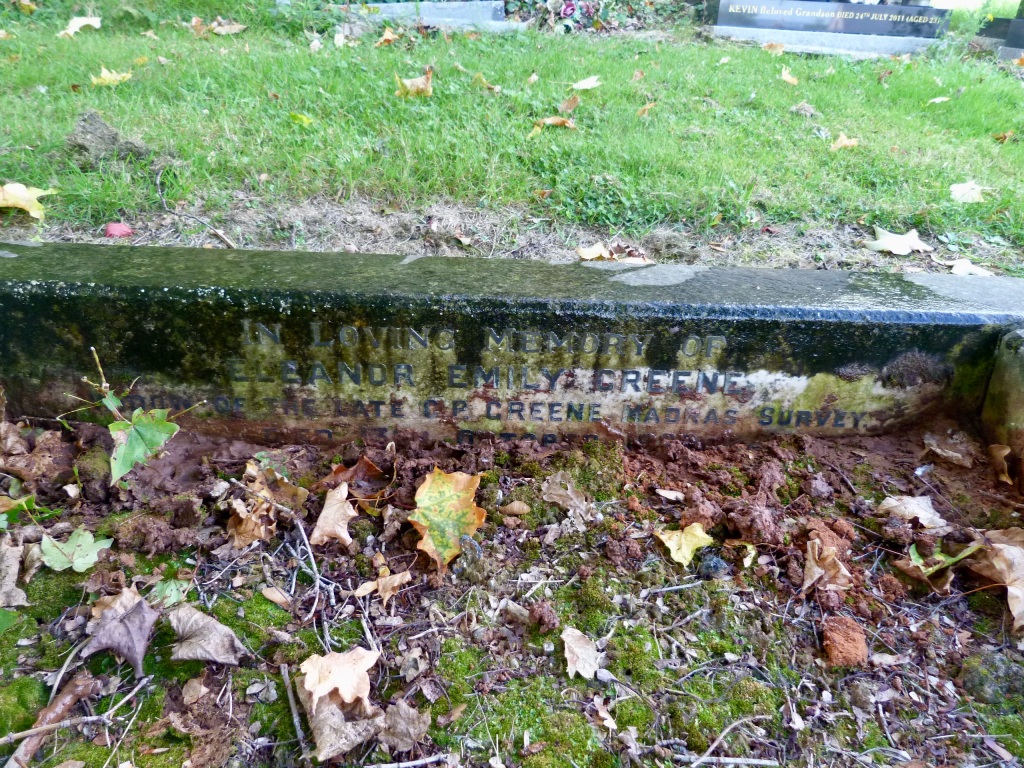
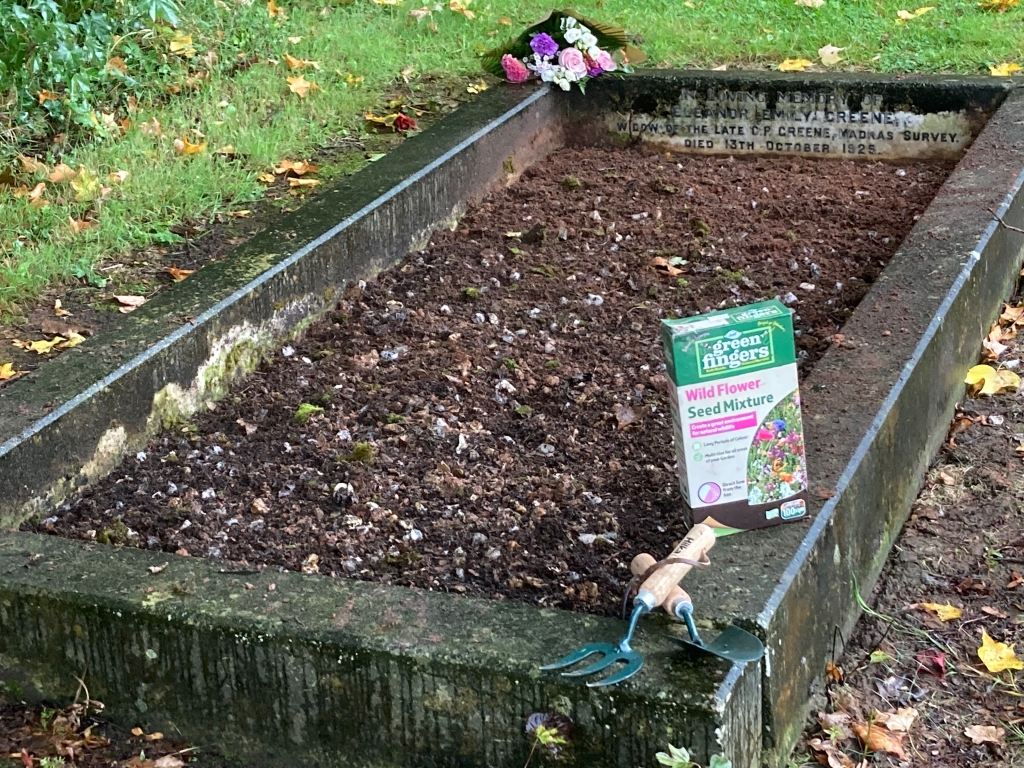
Eventually he took me to the grave himself as he thought it might not be obvious. The grave was a low rectangular wall, with an inscription on the stone at the head end. It was in a poor state, with most of the text obscured by decades worth of soil and leaves.

grave of Eleanor Emily Greene

I was upset and when Brian left I burst into tears and kept saying sorry to this much loved woman, now sorely neglected. I determined to restore her grave to its proper state. The next day I returned, armed with a new trowel and fork, a scrubbing brush, a bottle of water and a pack of wildflower seeds. I am pleased with the result and hope it will bloom successfully next summer.

In Loving Memory of Eleanor Emily Greene, widow of the late GP Greene, Madras Survey. Died 13th October 1929

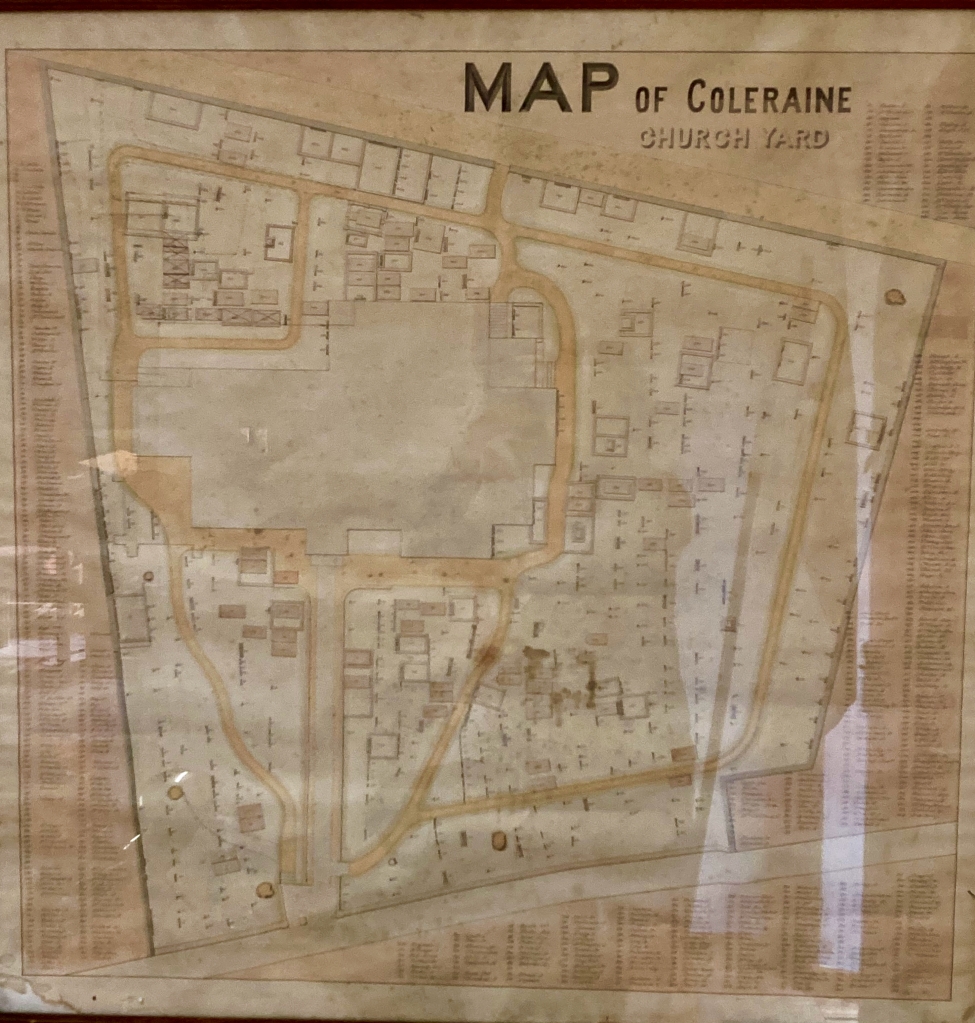
My next target was EEG’s grandfather, Dr John Boyd MP, DL (1789-1868), of Coleraine. First I went to the town cemetery but there were acres of graves and no way of finding my ancestor. I rang the local cemeteries department and learned that he wasn’t buried there anyway. ‘Try St Patricks in town,’ they suggested. The church dominates the town centre and, as I walked towards it, I could see an elderly man wrestling with the padlock on the gate. I explained my quest and asked to be let in. ‘I only open the church on Wednesdays at noon – we have a communion service at 1pm,’ he said, ushering me in. I started to search the graveyard and then he called me into the church office. There was a map of the graveyard on the wall, with all the names of the people buried there.

St Patricks Churchyard map, Coleraine

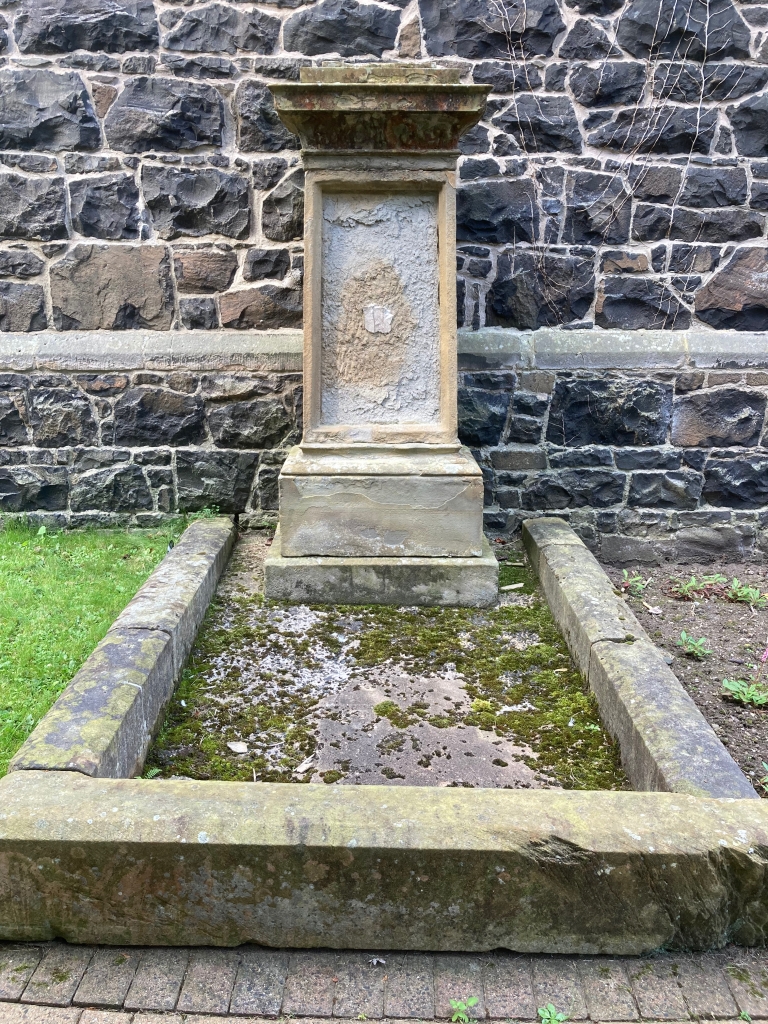
Boyd is quite a common name in Northern Ireland but there was only one Dr Boyd. It must be him, surely? And the grave was more or less outside the office door. It soon became obvious why I hadn’t seen any reference to his grave on Ancestry. The whole face of the headstone was erased. Defaced? Broken off? Hard to say. I would never have found it without the map.

Likely to be the grave of Dr John Boyd MP DL

I feel exceptionally lucky to have been in the right place at the right time to find these graves. I was also lucky when I visited Cullybackey, meeting someone in the village community hub who gave me details for the organiser of the Cullybackey Historical Society. We’ve had a long chat and promised to exchange news. I found Sam Haughton‘s grave in the local graveyard but Matilda Knowles is buried in Dublin. More of that anon as I travelled on to Dublin after my tour of the North.

Notable Person

Dora Metcalf is now officially a ‘notable person’ with her own Wikipedia page. I don’t know exactly how the process works but the search engines look for reference to the person on several reputable websites. Over the last couple of years I have written guest blog posts for various organisations, including the Women Engineers’ History, Women in Tech and Science Ireland, Women Who Meant Business and the Women’s History Network. There is also the webinar I gave for The National Museum of Computing and, of course, there is this website that I created. I guess that must add up to enough reputable websites. I am thrilled that this has happened, not least because apparently only 19% of ‘notable people’ are women, according to Wiki Women in Red, a group of editors trying to correct the gender bias.

Dora’s page includes a reference to an article about the Davis Archive, which details all the female mathematicians from the 1870s through to 1940. I spoke to the creator of the archive about three years ago, AE Davis, and as a result spoke at the British Society for the History of Mathematics conference in 2021. I was sad to read in the article that Ms Davis had died at the end of 2020, but it was a phenomenal piece of work that she did and I salute her.

This week there was a report that plesiosaur fossils had been found in river systems in Morocco, implying their adaptation to a freshwater habitat. Previously it was believed they were marine animals only. The find gives greater credibility to the Loch Ness monster story and, by implication, to the Loch Morar monster, Morag. Dora and John claimed to have seen Morag on numerous occasions and I think they would be thrilled to hear this news!

Back in April I received feedback from a publisher that my novel about Dora is good, but not quite good enough for them to publish. I decided to employ a professional editor to help me improve it and since receiving his report I have been editing and redrafting. Writing a novel is a craft like any other and it needs training and practise to improve. I am gradually learning and I am pleased with the latest draft. It is slightly less true to life than before, mainly to give it a more dramatic ending, but I hope it will now attract some interest from the publishing industry.

Latest Research

The 1921 census was released at the beginning of 2022 and I was keen to see where Dora was living at that time. I knew she’d returned from Ireland in 1919 and had been selling Comptometers for Herbert E Robbins Ltd. After the First World War the British Government decided it wanted to redeploy its existing Comptometers rather than buy any new ones. Dora was tasked with surveying all the various government departments about their calculating requirements and I imagine she also contributed some fresh ideas on the potential for mechanical accounting. The result was an order for 200 new Comptometers, the largest order the company had ever received! Her entry in the 1921 census describes her as ‘in charge of Comptometer service to Governments Depts.’

entry from 1921 census: Comptometer adding and calculating m/c, in charge of Comptometer Service to Government Depts.

Dora was living with her mother at Durham Terrace, Bayswater, London, at the time. There is no mention of her sister Hilary and, when I looked her up, she didn’t feature anywhere in Britain. I wonder if she was in Ireland, but I cannot be certain. Her brother Howard was in Iraq with the Royal Artillery in 1921. The transcription of the census entry for Dora was gobbledygook but, if you pay to see it, you are allowed to make corrections, so I have.

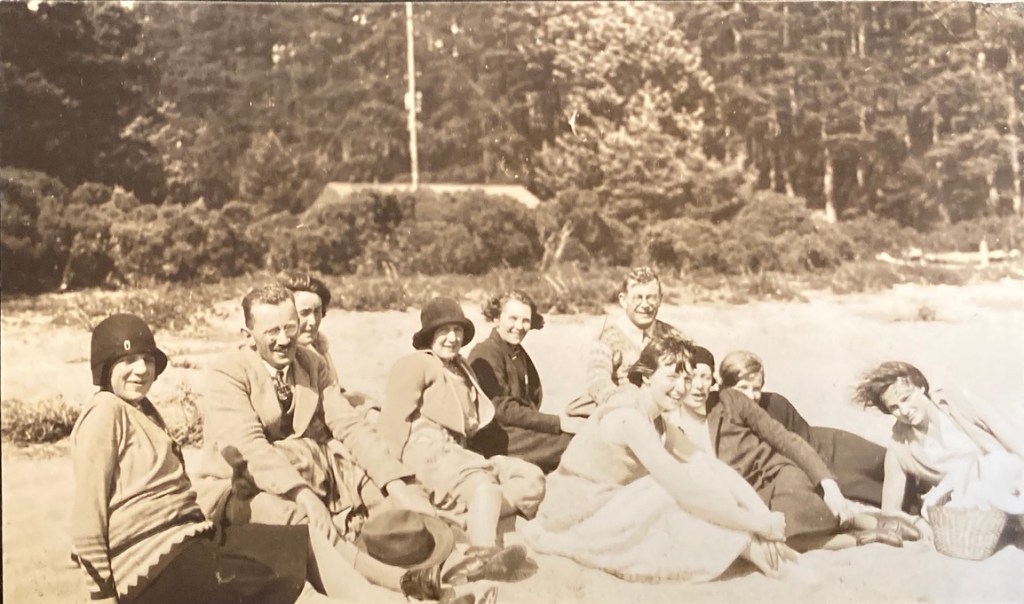
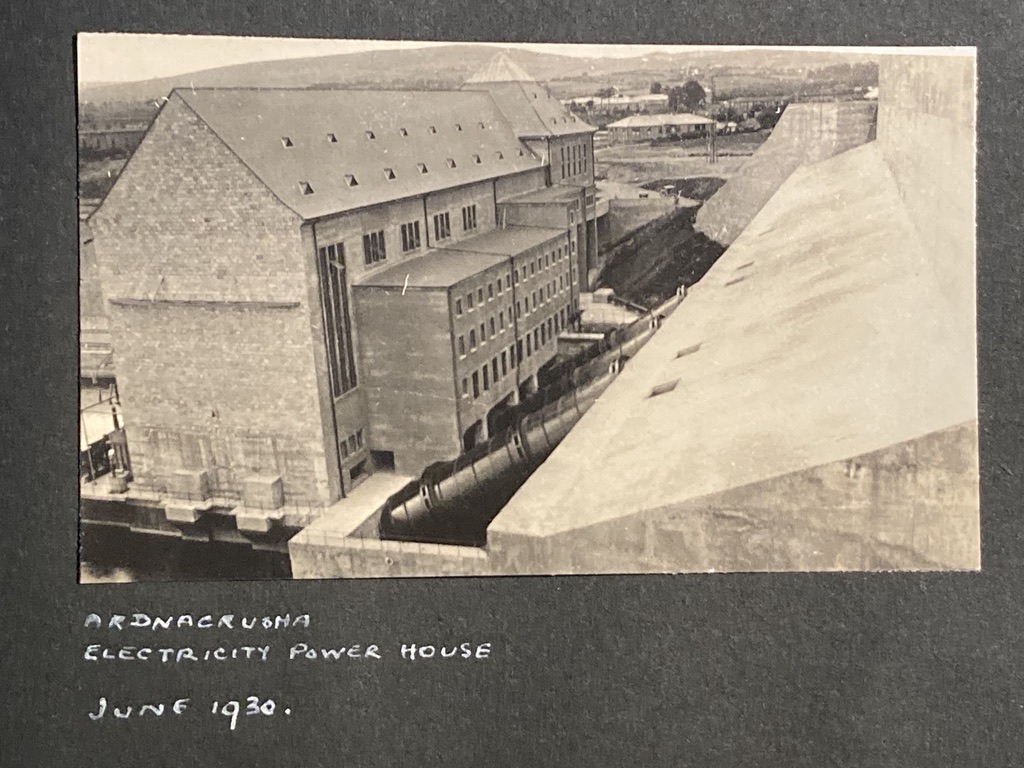
I recently looked through an old photograph album belonging to Howard (my grandfather) which gave some fresh details on Dora’s activities in 1930. This is the period when she worked on the Shannon Hydroelectric Scheme at Ardnacrusha. The scheme had begun in 1925 and was one of the largest civil engineering projects in the world. From 1929 it would bring power and economic development to Ireland, by 1935 producing 80% of Ireland’s electricity. Dora’s role was to do the costings for extending the transmission lines, which included substantial payments to landowners for putting pylons in their fields. What I hadn’t realised was that there was a family visit to see the scheme in 1930.

June 1930 family photograph of Greenes and friends
L to R: Hilary, Howard, his wife Phyllis, Kathleen Dobbs, Peggy & Owerson Flynn, Dora (in suit and hat behind laughing unnamed woman), Ali, Joy.
Ardnacrusha Electricity power house, June 1930

In my grandfather’s album there was also a photo of Dora (second to last row, below) attending a “statistical conference” in Geneva in 193o. Her cousin Everard Greene is present too (seated back row, under white square), captioned as ‘Kitten Greene’. He does look like a pussycat but that’s the first time I’ve seen him referred to by this name! His full name was Christian Augustine Everard Greene and I know Christian is sometimes shortened to Kit, but still. Dora says she met Ethel Wood in Geneva in 1930 and I wonder if this statistical conference was part of a League of Nations or International Labour Organisation assembly?

Statistical Conference, Geneva 1930

The League of Nations Assembly met in September every year and, from the late 1920s through the 1930s, there was much campaigning for equal rights for women, petitioning the League of Nations Assembly (all members) and Council (executive body consisting of 9 member states at this time). Viscountess Rhondda spearheaded the campaign via her Six Point Group, founded in 1921. In 1930 a subgroup was formed, called Equal Rights International (ERI), led by Helen Archdale, to lobby the League of Nations to agree a treaty on equal rights for women. I suspect that Ethel Wood was in Geneva as part of the lobby group that year – these three women were the founders of the Women’s Provisional Club that Dora would join in 1932.

Pioneers of the WPC

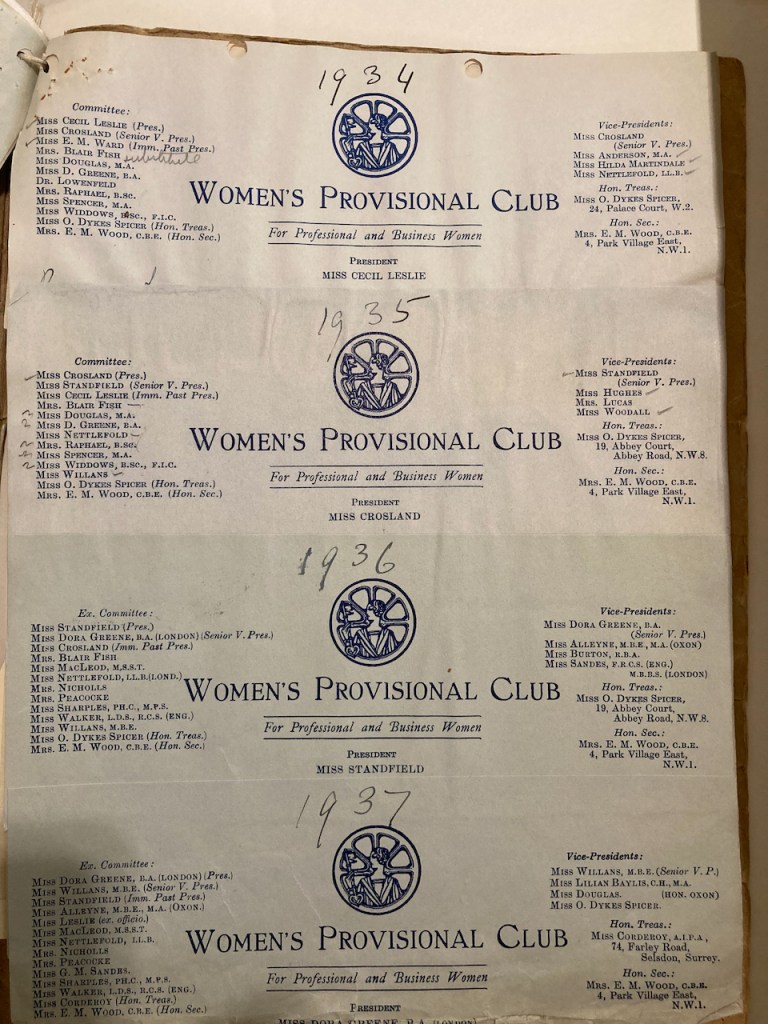
I had a wonderful 4 hours at the Women’s Library studying the Women’s Provisional Club (WPC) archive. There was a lot to look at so I just photographed any pages that seemed relevant so that I could get through all four boxes of documents. I learned that Dora joined the WPC in 1932, was its president in 1937 and was treasurer for 20 years from 1951. She seems to have been a permanent fixture on the committee since 1934.

Women’s Provisional Club Committtee 1934-37

In the annual WPC bulletin from 1938 there was a Who’s Who of members and these details have allowed me to investigate many of these women pioneers. The constitution of the club states that there was to be only one member from each profession or industry sector, except for the Civil Service, education and social enterprise. This accounts for the fact that there were about 100 members when there could have been many more. Below are some examples of the amazing women in the club (H denotes Honorary member):

First NameSurnameOccupationDetails
NancyAstor (H)Politician(19 May 1879 – 2 May 1964) was an American-born British politician who was the first woman seated MP, serving from 1919 to 1945.
DianaBeckNeurosurgeon(29 June 1900 – 3 March 1956) was the first female neurosurgeon.
SybilCampbellJudge(9 Oct 1889 – 29 Aug 1977) was the first woman judge in Britain, and remained the only full-time woman judge in England until her retirement.
MaudCroftsSolicitor(16 Jun 1889 – 18 Jan 1965) the first woman to be qualified as a solicitor in England in January 1923.
Prof WinifredCullisPhysiologist(2 June 1875 – 13 November 1956) was a physician and academic, and the first woman to hold a professorial chair at a medical school.
KittyDuchess of Atholl (H)Politician(née Ramsay; 6 November 1874 – 21 October 1960)
MargeryFryJudge(11 Mar 1874 – 21 Apr 1958) was a British prison reformer as well as one of the first women to become a magistrate.
EllaGaskingBusinesswomannée Batchelor OBE (4 Apr 1891 – 17 Dec 1966), was a prominent British businesswoman as chairman and managing director of Batchelors canned foods.
AdelineGenee Isitt (H)Founder Royal Academy Dancing1878-1970 In 1923, Danish born ballet dancer, founder of the “Association of Teachers of Operatic Dancing of Great Britain” in 1920. By 1935, the group was granted a Royal Charter. Made a dame in 1950.
BeatriceGordon HolmesFinancier(30 Sep 1884 – 21 Nov 1951) was a British stockbroker, suffragette, trade unionist, and author.
ElizabethHaldane (H) 27 May 1862 – 24 Dec 1937 Scottish JP, author, biographer, philosopher, suffragist, nursing administrator, and social welfare worker.
KathleenHalpinWomen’s gas councilChief Administrator Women’s Voluntary Service; Chair of Fawcett Society, Organising Secretary of the Women’s Gas Council
CicelyHamiltonPlaywright, actor(née Hammill; 15 Jun 1872 – 6 Dec1952), was an English actress, writer, suffragist and feminist
Dame CarolineHaslettEngineer(17 Aug 1895 – 4 Jan 1957) English electrical engineer, champion of women’s rights. First secretary of the Women’s Engineering Society and the founder and editor of its journal, The Woman Engineer. Co-founder of the Electrical Association for Women.
Dr Mary LucasKeene FRCSAnatomist(15 Aug 1885 – 9 May 1977) was professor of anatomy at the London School of Medicine for Women, first woman professor of anatomy in the UK, first woman president of the Anatomical Society of Great Britain and Ireland, and a president of the Medical Women’s Federation
GertrudeLeverkusArchitect(26 Sep 1898 – 8 Nov 1989) Leverkus established the women’s committee of RIBA in 1932 promoting the interests of women architects, advising recent graduates and recording cases of discrimination.
Dr MargaretLowenfeldChild Psychologist(4 Feb 1890 – 2 Feb 1973) was a British pioneer of child psychology and play therapy, and a medical researcher in paediatric medicine.
MarionLyonAdvertising Mgr, Punch(1885-1940) first woman executive ever employed by Punch and the first woman advertisement manager of a major publication. Lyon was elected first president of the Women’s Advertising Club of London (WACL)
Eileen C.MacLeodSpeech therapist(1895–1987) was a phonetics researcher at UCL, a pioneering speech therapist, and a formidable trainer of announcers for the BBC.
ChrystalMacMillanBarrister(13 Jun 1872 – 21 Sep 1937) was a suffragist, peace activist, barrister, feminist and the first female science graduate from the Uni of Edinburgh and their first female honours graduate in mathematics.
Dr PhilippaMartinEye surgeoneye surgeon and chairman of the London Eye Hospital
Dr LouisaMartindaleOBGYN(30 Oct 1872 – 5 Feb 1966) English gynaecologist and writer. She also served as magistrate, was a prison commissioner and a member of the National Council of Women.
HildaMartindale CBETreasury(1875-1952) one of the first female civil servants and sought to improve working conditions, particularly for women, throughout her life.
YevondeMiddletonPhotographer(née Cumbers; 5 Jan 1893 – 22 Dec 1975) was an English photographer, who pioneered the use of colour in portrait photography
EmiliePeacockeJournalist, Daily Telegraph(26 Mar 1882 – 25 Jan 1964) First woman reporter at the Daily Express and later led the “women’s department” at the Daily Telegraph.
WinifredRaphael/ SpielmanOccupational psychologist(21 Oct 1898 – 14 Dec 1978) pioneer involved in trying to improve industrial conditions for workers,
EleanorRathbone (H)Politician(12 May 1872 – 2 Jan 1946) was a British Member of Parliament (MP) and long-term campaigner for family allowance and women’s rights.
Gladys MaudSandesGynaecologist(5 Nov 1897 – 17 Jan 1968) was an Irish surgeon and venereologist and the first woman surgeon at the London Lock Hospital in 1925.
RoseStandfieldMusic publisherDirector of Augener Ltd
Lady MargaretViscountess RhonddaFounding President of WPC(12 June 1883 – 20 July 1958) Welsh peeress, businesswoman and suffragette. Founder of Time & Tide mag, and in 1921, the Six Point Group, an action group that focused on the equality between men and women and the rights of the child.
EnidWalkerDentistPioneering dental surgeon. Also on Council of Electrical Assoc for Women
SibylWiddowsChemist(1876–1960) was a member of the Chemistry department at the London School of Medicine for Women for 40 years.
EthelWoodFounder WPCScientific management research, director Samson Clark advertising
EleanorWoodgateMin of HealthDeputy chief inspector, Northern Ireland
(Eleanor) MaudeWoodyardAdvertisingManaging Director, Saward, Baker & Co
ElsieZimmernCountry Women of the World(1876–1967) English women’s rights activist. She became active in the National Council of Women, working on the Maternity and Child Welfare Committee from 1917 to 1928. From 1925 to 1930 she was the General Secretary of the International Council of Women

And of course there was Dora Greene, first woman tech entrepreneur and founder of the Information Services industry! She must have felt completely at home with this extraordinary group of women: her sisters, her supporters, her business network, her political connections, her communications team. For my next book I think I might write a super-heroine novel featuring these incredible women, changing the world, fighting nazism, fascism and misogyny and using their network to achieve their goals.

Connections

The National Museum of Computing has published the Youtube presentation that I gave about Dora back in June. My talk covered her whole life but TNMOC were particularly interested in the Second World War and the Bletchley Park connection. It’s about an hour long including questions.

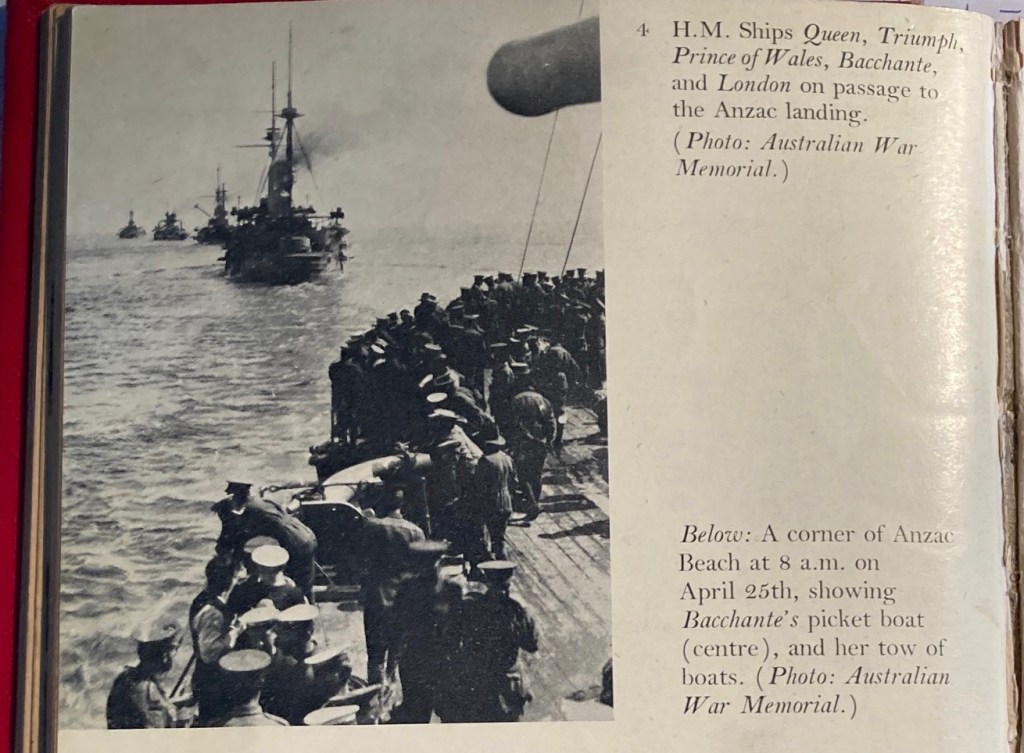
I have made some interesting connections by going through Dora’s address book from 1982. In among the chimney sweep, the dentist and local friends are some names from her past. I tried looking up some of them and succeeded in finding Wikipedia pages, military and naval records and even books that these people had written. Captain Eric Wheeler Bush (1899-1985), for example, was a naval contemporary of Captain John Metcalf‘s. He wrote several books and I bought a copy of his autobiography Bless Our Ship to learn more about him and his career. It turns out that he was in the same flotilla of battleships as John, that landed troops at Gallipoli in April 1915.

John Metcalf was on board HMS Triumph

I also found a friend of Dora’s who was a young woman embarking on her career at Leeds University in 1975. Her father was a great friend of Captain Jack Boord, Dora’s nephew’s father in law. I spoke to Antonia who remembered Dora fondly, as an inspirational, supportive friend. She recalled an anecdote that, in 1913, Dora had been interviewed for the role of secretary to David Lloyd George (UK Prime minister 1916-22 and Chancellor at that time), a post that went to Frances Stevenson (1888-1972), who became Lloyd George’s mistress and later his second wife. Dora felt she’d had a lucky escape, as being his mistress was part of the ‘conditions of service’ for the job! She remained a lifelong friend of Frances. I suspect that their connection began when Dora was a junior mistress at Allenswood Academy, where Lloyd George’s daughter Megan was a student and Frances was her governess.

I have been trying to track down descendants of Dora’s cousin Everard Greene. His daughter (Grace) Venetia (1909-90), married Dr John Frederic Loader Walley (1909-79) of Wadeford, near Chard in Somerset. They had a daughter called Diana Eunice who married an American called Arthur Begelman and emigrated to Virginia but I haven’t been able to get any further. Everard’s daughter Margaret Elizabeth (1912-82) married Commander John Dudley Birch RD DSC (1905-85), who latterly lived at Chorleywood, Herts. Dora also had Peter and Mary Birch in her address book, who I think are the next generation down, but I can’t get any further. Mary Felicity (1916-?) married Vivian Leslie Thompson in 1940. Everard’s son Alfred David (1921-2006) married Jean Linford and lived in Northwood, London. If anyone has any clues to living descendants, I’d love to hear from you!

Women’s Provisional Club

I have at last had some good news from the Women’s Library at LSE – they have found the Women’s Provisional Club (WPC) archive! Dora was a member from the 1930s to the 1950s and I believe the WPC was a source of female support, inspiration and powerful contacts for her. The Librarian has sent me a few pages to whet my appetitie, before I visit the Women’s Library in person in November (fingers crossed).

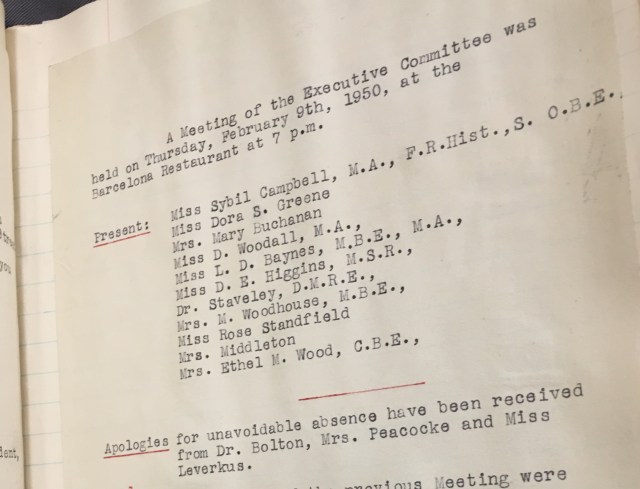
Dora was treasurer for a number of years. Sybil Campbell (1889-1977) was a barrister and became Britain’s first female judge in 1945. She studied at Girton College, Cambridge. Miss LD Baynes was Assistant Principal at the War Office in the Second World War. Miss Dorothy Higgins (1892-1970?) was a radiographer and close friend of Dr Dulcie Staveley (1898-1985) who was the Royal Free Hospital’s first woman radiologist. Rose Standfield was a professional singer. Gertrude Leverkus (1899-1976) was a pioneering architect, qualifying from UCL in 1919.

Ethel Wood (1876-1970) was a philanthropist and campaigner for women’s rights who founded the WPC. She was a director at Samson Clark advertising agency in the 1920s and was also the third president of Women’s Advertising Club of London, from 1925 to 1926. In an article entitled Advertising as a career for women, Wood argued that advertising was a democratic profession with only one real acid test: work that “brings results”. Wood concluded: “Having said so much about sex in advertising, in my opinion the more it is forgotten, and folks judged by the quality and effectiveness of their work and not by their gender, the better, not only for business, but for the world at large.”

I can’t wait to learn more about these powerful women friends of Dora’s! The Barcelona Restaurant, where the WPC met in the post-war years, was in Beak Street, Soho, and was a haunt for British surrealist artists and other creatives.

Edit & Pitch

The talks I gave about Dora went well and you can watch the presentation I gave at the British Society for the History of Mathematics conference below. It’s a short one – only 17 minutes – but it developed into an interesting Q&A with the participants. Most of them shared my frustration with the lack of documentary evidence and the consequent holes in Dora’s story. One of my fellow presenters, talking about women mathematicians in the astronomy department at Cambridge University, had had to find reference to her women of interest by reading the ‘acknowledgements’ section of academic papers from the period. The complex mathematics that the women had contributed to various projects was regarded in the same way as the typists who wrote up the papers. It must have been a long, tedious trawl through the archives to find these snippets and the glimpse they gave into the women’s work and status.

I am currently doing a short course on ‘editing and pitching your novel’ with Curtis Brown Creative, part of a major literary agency. I have been going through my novel scene by scene, making notes of what happens, how it moves the story forward and where corrections are needed to deal with both structural issues and more minor tweaks. I want the book to be the best it can be, however it ends up being published. The next part of the course will help me refine and improve my submission package, but I have to accept that it is still a long shot. Everyone seems to have written a novel during the pandemic and publishers have no gaps in their schedules till 2023, I’m told. We shall see.

Via this website I was contacted by Dora’s godson, now a retired cardiologist. It was thrilling to speak to someone so close to her and he was able to tell me more about her life at Morar and in London. His 21st birthday party had been held at the Metcalfs’ apartment in Kensington. I hadn’t realised that they used to drive up to Morar and bought property in Otley (where they lived for their final years) as a way station. I’d assumed they had travelled by train to the Highlands. Like everyone else, though, he knew nothing of her wartime activities so I’m still none the wiser there!

Update on Talks and Books

I will be speaking about Dora’s life and work via Zoom at the National Museum of Computing on 17 June at 6.30pm. You can find out more and book a ticket here. The emphasis for this talk is on how her career led to her role in the Second World War, managing the contract for supplying bombes to the Bletchley Park codebreakers.

Then on Thursday 15 July I will be speaking about Dora at the British Society for the History of Mathematics conference, more info here. This talk focuses more on how her mathematical skills were deployed to create the information services industry.

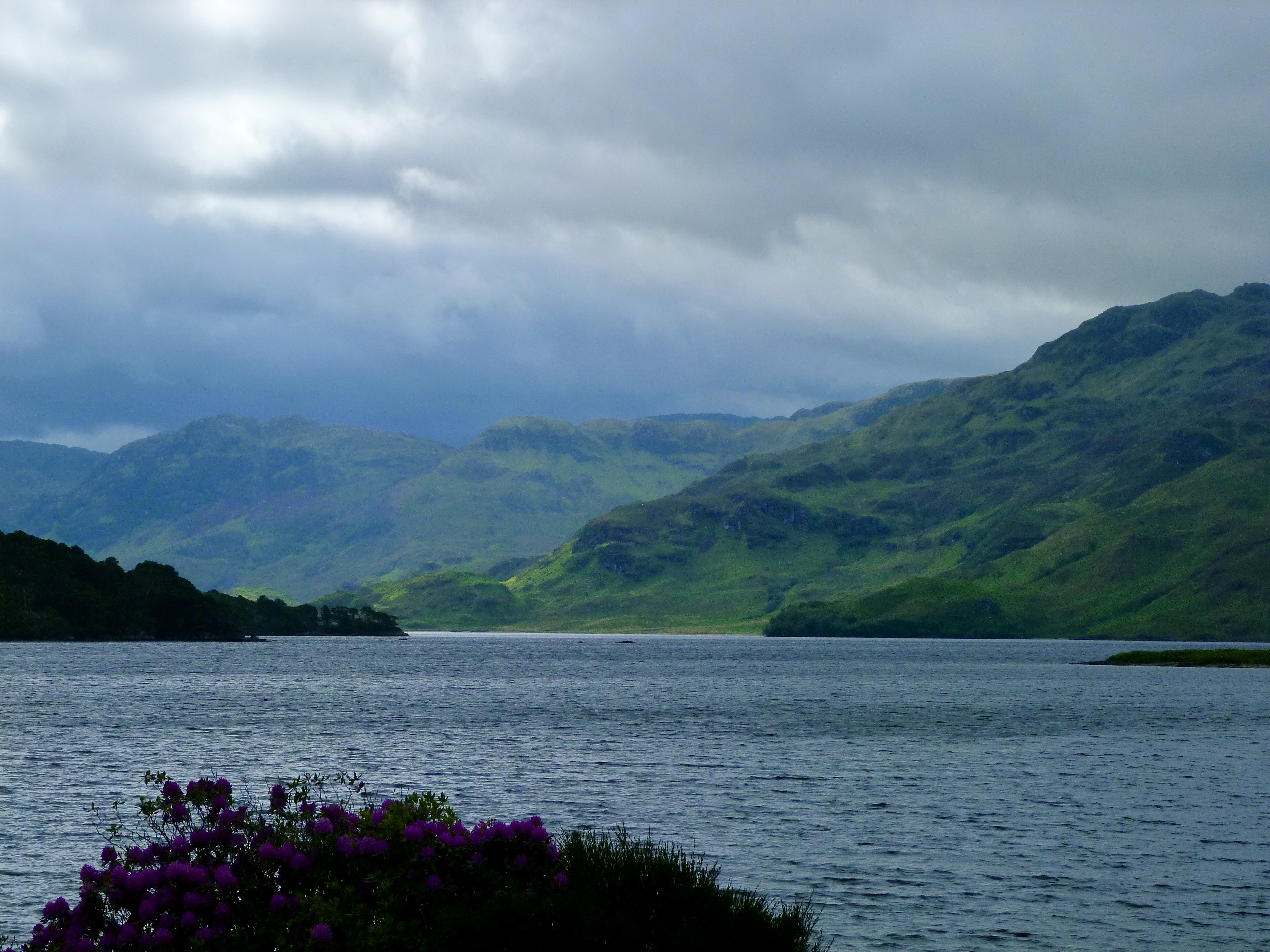
I am writing this in the Highlands. The priest at Loch Morar very kindly let me into the Lovat church on the loch, whose round tower must have been so resonant for Dora. I have updated the photos on the St Cumin’s Church page with some images that I took of the church and its gorgeous stained glass. This is the view from the church today:

view of Loch Morar from St Cumin's church

Blogs, Talks and Books

The blog post about Dora at the Women in Tech and Science Ireland tells how she was the founder of the information services industry in the 1920s. Dora quickly learned that most businessmen and government department managers lacked the vision and mathematical skills to understand how to make full use of the new mechanical calculators and tabulators. She was a mathematician and an entrepreneur and saw the potential for providing services rather than hardware.

I have been contacted by the National Museum of Computing who wanted to hear all about Dora’s role in the computing industry. They are particularly interested in her WW2 history as the museum is adjacent to Bletchley Park and the story of BTM’s struggles to supply the bombe machines and their operators is not well known. We also discussed Dora’s role as a female pioneer in a male dominated world. I have been invited to give a talk about her in June 2021 and this will appear on the NaMoC events page in due course.

This week I’m meeting with colleagues from the British Society for the History of Mathematics to discuss what we are going to present at their online People, Places, Practices Conference in July. The general topic is ‘women in computing’ but we need to be a bit more specific! More news on this when I have further details to share.

Lucent, women writers on sensuality in Scotland, from 8D Press

I have a short piece in an anthology of Scottish writing coming out this summer. There are 23 Scottish women writers featured altogether, each inspired by the sensual writing of Nan Shepherd. My piece is about my journey to reach Dora’s remote home on the shore of Loch Morar. The anthology is called Lucent and it will be published by 8D Press as a high quality limited edition, a collector’s item!