We’re now less than six months away from the launch of A Bitter Equation, scheduled for the end of March 2027. One of the biggest events in global publishing took place last week, the Frankfurt Book Fair, bringing together industry professionals to exchange news, make deals and forecast trends. According to novelist Karin Gillespie, who attended this year’s event, hot trends in fiction include novels based on the lives of real people. This is good news for my novel based on the real life of Dora Metcalf!
My publisher, the Book Guild, has been in touch to finalise the blurb that they will soon be sending out to the trade, alerting booksellers to the company’s forthcoming titles. Marketing to the public won’t be happening until the new year, once the Christmas period is over and everyone has sobered up! This is what they are saying to the trade:
Title: A Bitter Equation
Tagline: Tragedy sparks a visionary idea… (Based on a true story.)
Blurb
When Irish mathematician Dora loses her fiancé during the First World War, she makes herself a promise: to live a life extraordinary enough to honour his sacrifice.
In a time when women are expected to know their place, Dora sees the world changing potential of machine calculation to transform the way that industry and governments work. Determined to make her vision a reality, she challenges a male-dominated world and builds a pioneering business empire across Britain and Ireland.
But ambition comes at a price, and everything she has fought so hard to achieve is threatened during the Second World War. Will her work on a top-secret contract with Bletchley Park’s codebreakers destroy her reputation and put her back in her place?
Based on a true story, A Bitter Equation is a tale of one woman’s determination to change the world.
I’m starting to get excited about the launch, but there are still several processes to go through. Edits and typesetting are all done but I have to wait a bit longer to see the cover design. Please sign up to the blog for news of the publishing journey.
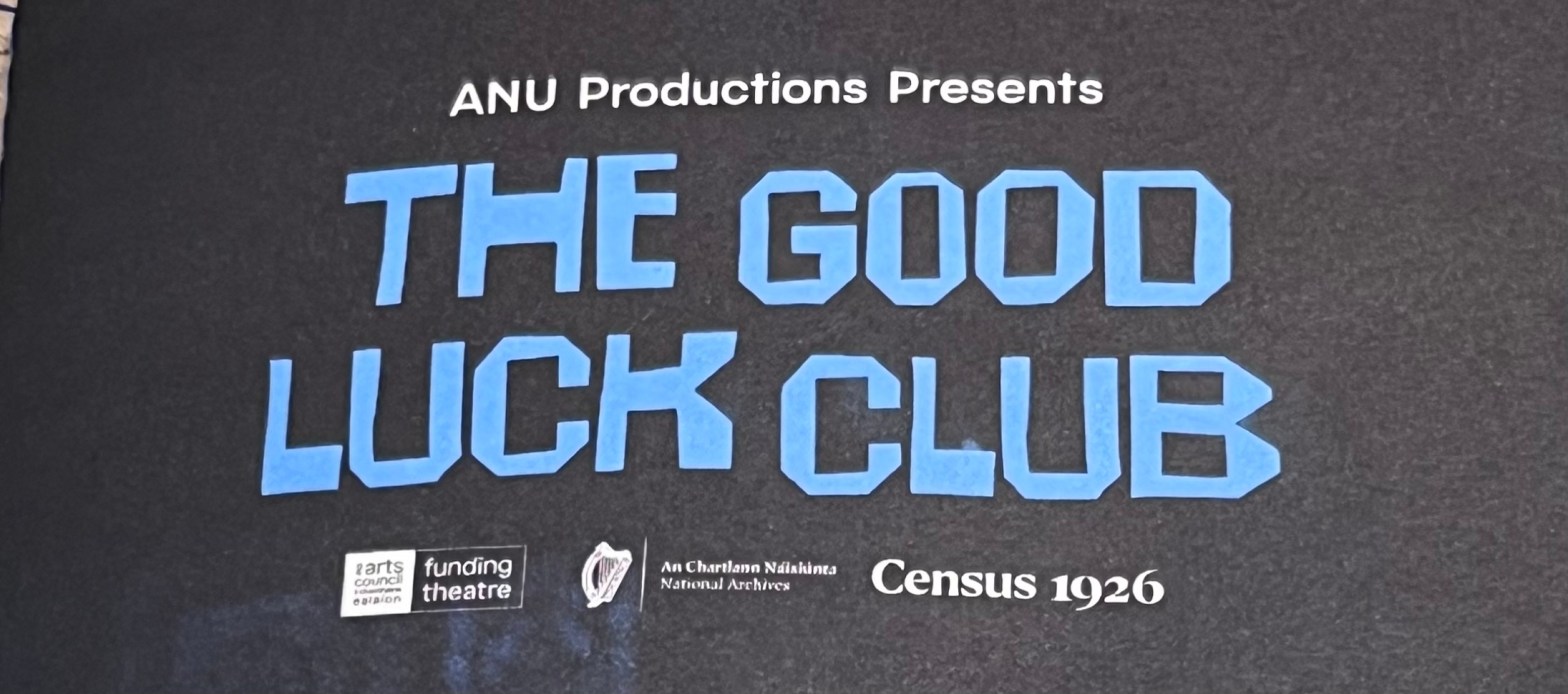
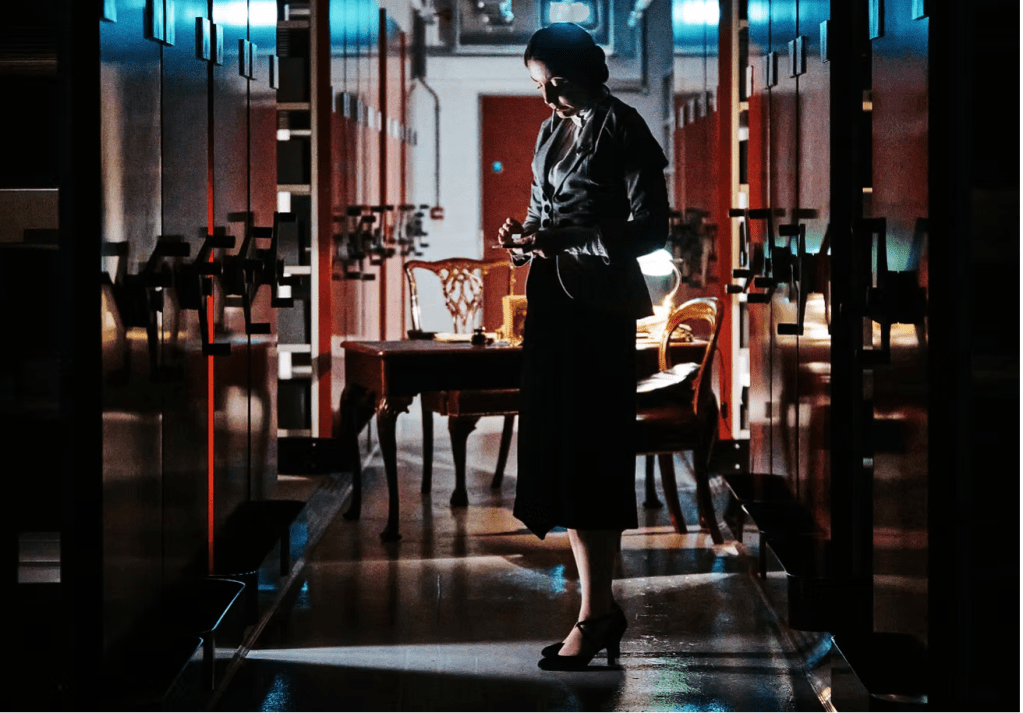
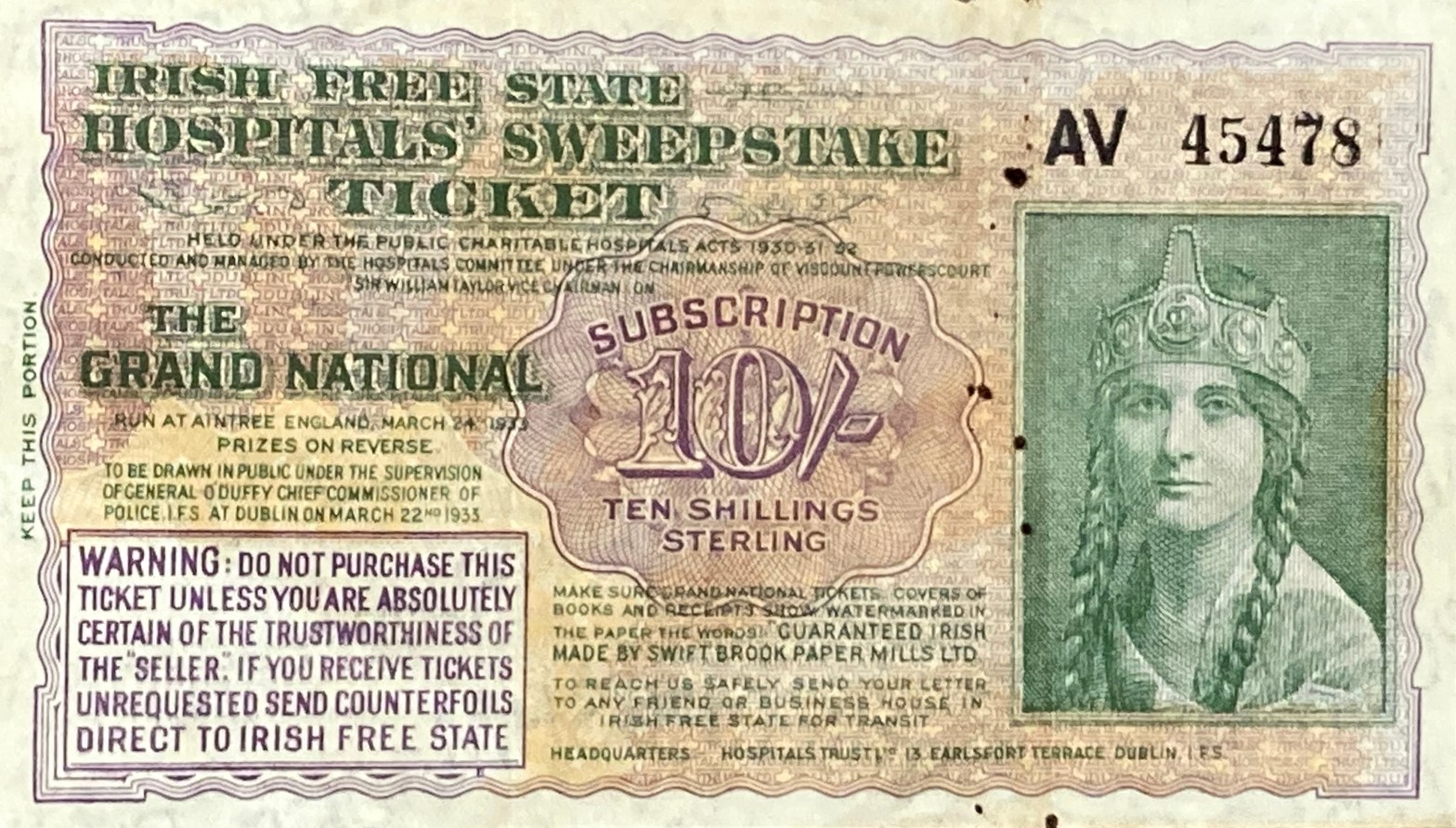
The Good Luck Club is an extraordinary evocation of the reality of the Irish Hospitals Sweepstake, performed in the vast warren of the National Archives building, with the actors leading us from one scene to the next. It was quite a feat of writing, directing, lighting, set design and acting to make it work seamlessly and comprehensibly. I was impressed with the clarity and wit of the writing and the intensity of the actors’ performances. We weren’t so much an audience as participants in an engaging and immersive experience.
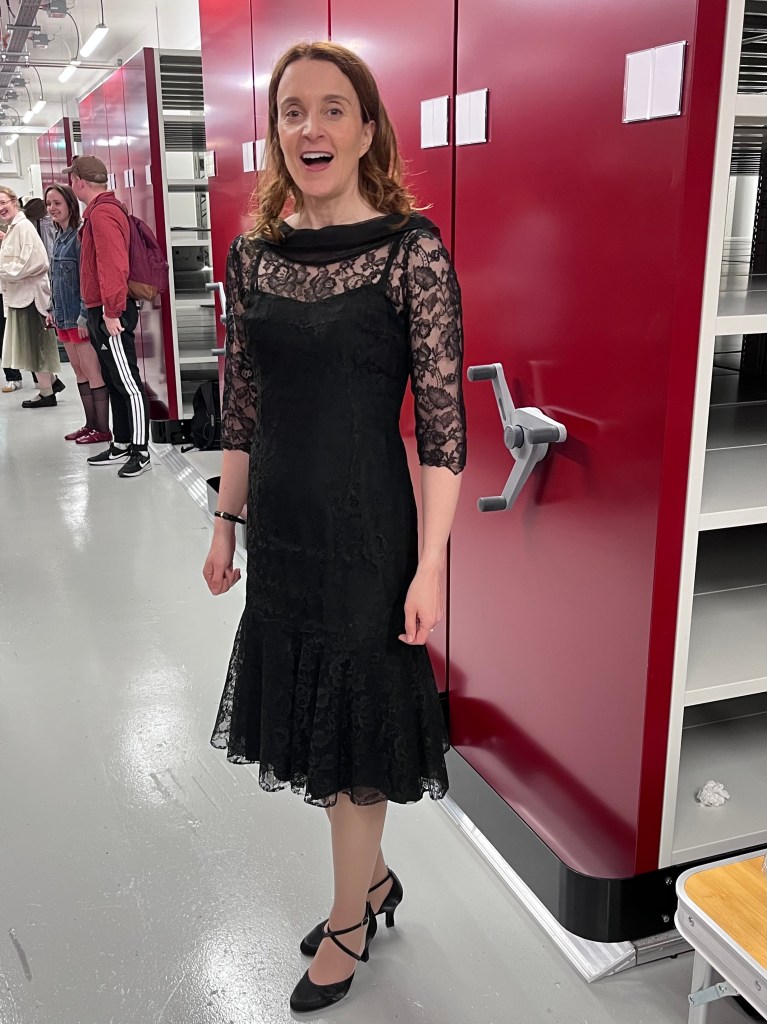
Maeve Fitzgerald absolutely nailed Dora’s character and the costume designer had her perfectly dressed. The company had even bought a Comptometer so that Dora could show Joe McGrath (played, with menacing charm, by Oliver Flitcroft) what an accurate and speedy tool it was for any mathematical calculation. I was truly humbled by the skill of both actor and writer in conveying almost Dora’s entire story in a few lines and with some short but vivid scenes.
The Irish Hospitals Sweepstake was morally questionable from the outset and, behind the scenes, it soon descended into mob-style violence and corruption, particularly in the US where most tickets were sold. My favourite line in the play was Dora castigating one of the organisers, “violence metastasises, that’s what I think” and urging them to leave a more positive legacy for the sweepstake.
I took with me Dora’s 1950s cocktail dress for Maeve to try on after the show and it fitted her like a glove.
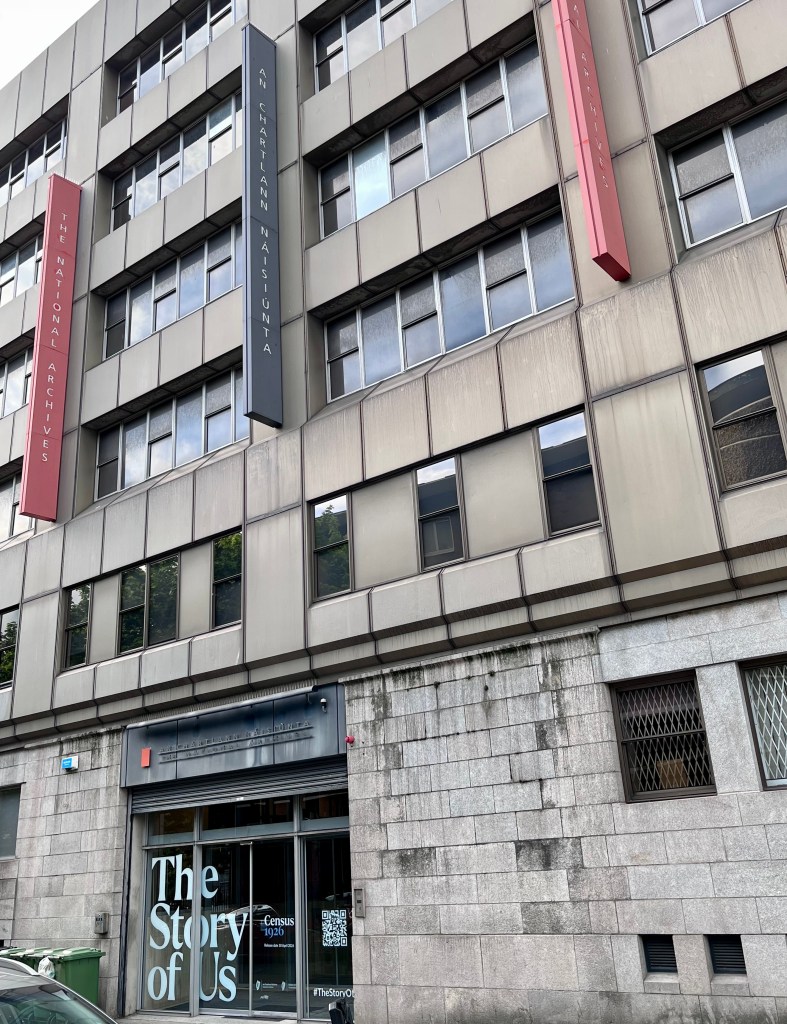
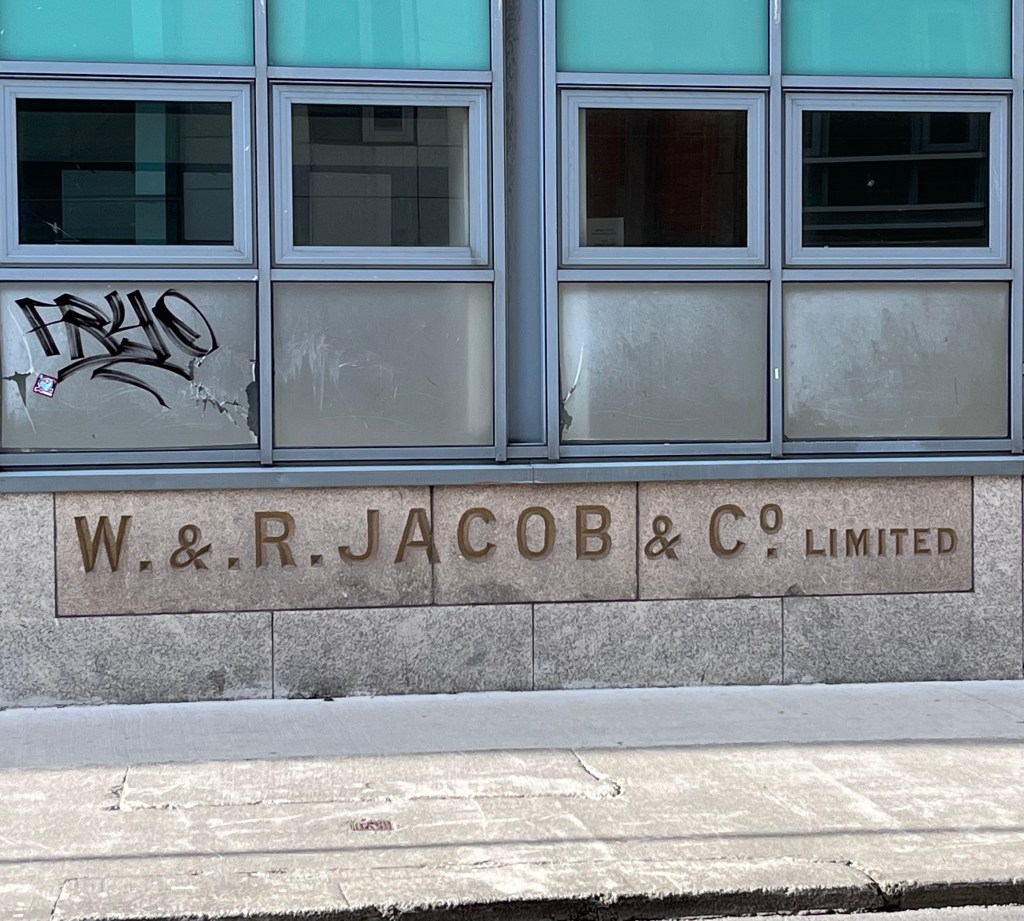
I hadn’t realised that the National Archives building was the old Jacob’s Biscuits site, one of Dublin’s largest employers in the interwar years, and with a largely female workforce. This show is part of the National Archives’ centenary celebrations for the 1926 census, taken just five years after the declaration of the Irish Free State, lifting “the story of us” off the shelves and breathing life into it to create meaning and connection.
On arrival I was greeted warmly and thanked for coming. As if I would miss this unique opportunity! While we were waiting, I chatted to one of the other audience members and it turned out she’s a historian who also spoke at last year’s Women’s History Association of Ireland conference. Small world!
After the show I spoke with some of the cast and to writer and director Louise Lowe of ANU Productions. She sees Dora as another of Ireland’s unsung female actors in the history of the republic. I am so grateful to her for acknowledging Dora and raising her profile. Louise had previously created a show based on Emma Donoghue’s novel The Pull of The Stars (one of my favourite books, as it happens) starring Maeve as Dr Kathleen Lynn, so Dora is in exalted company.
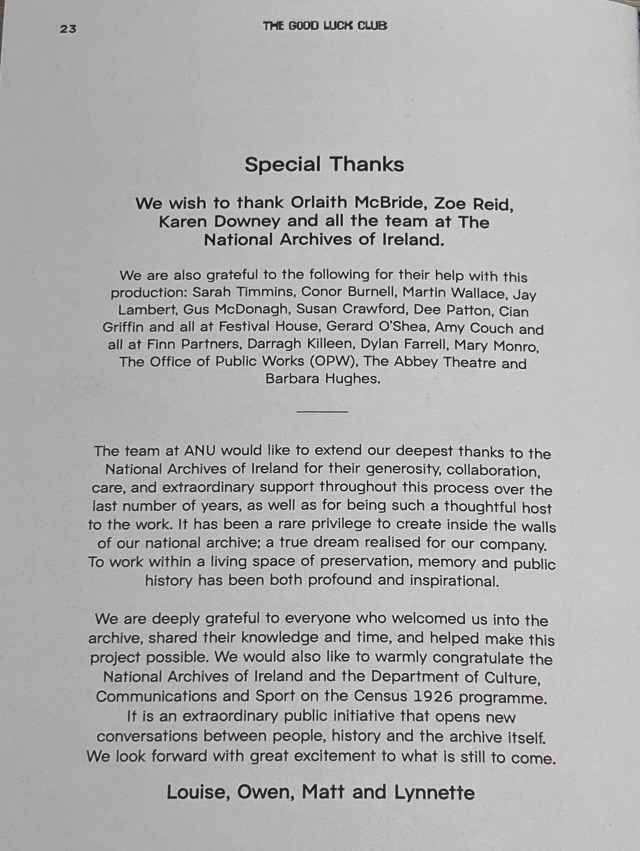
ANU Productions graciously acknowledged my small contribution to The Good Luck Club in their brochure. I was thrilled to be able to answer questions about Dora, helping Maeve to prepare for the role and shaping the writing a little with my additional information.
The show is sold out but the lucky few with tickets have definitely won the lottery with this one!
There’s a comprehensive 5* review of the show written by Chris O’Rourke of The Arts Review, that describes Dora as “formidably divine.” The Irish Times also reviewed the show very positively but this one is behind a pay wall.
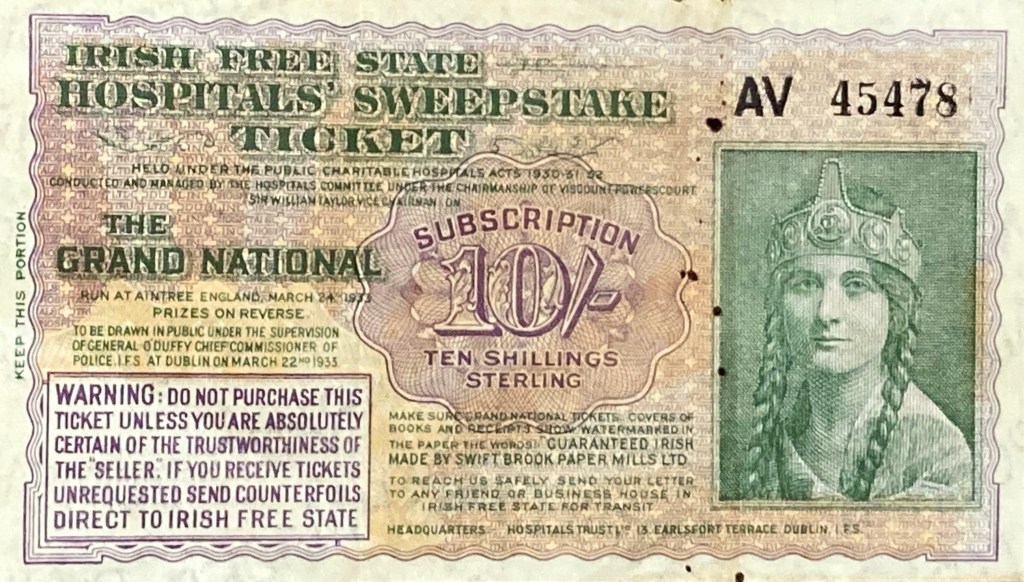
This week I was contacted via the website by an Irish actress, who said she was performing in a play about the Irish Hospitals Sweepstake. The Sweepstake was Dora’s biggest client in the 1930s and rescued her struggling business during the depression after the Wall Street Crash of 1929. Anyway, the actress said she was playing the part of Dora and could she ask me some questions to help her prepare for the role! I couldn’t believe it!
I am thrilled that Dora is being brought to life on stage. The play is called The Good Luck Club, written and directed by Louise Lowe of the highly regarded ANU Productions, as the first in a series on “framing the nation,” looking at the early years of the Irish republic. I have spent so long researching Dora’s story, trying to get her the recognition she deserves, that I am a bit overwhelmed to suddenly have her featuring in a play as a key actor in Irish history.
I knew that the sweepstake was a huge money spinner for the Irish economy, but I hadn’t realised that, in the 1930s, 4,000 (out of a population of 90,000) Dubliners worked on processing sweepstake tickets.
However, the sweepstake was somewhat morally questionable, with the organisers, Joe McGrath and his friends, making their fortunes at a time when lotteries were illegal in the UK and USA (where most tickets were sold) and creating a substantial and embarrassing balance of trade deficit for Great Britain.
The Good Luck Club is being performed at the National Archives of Ireland in Dublin, as part of their celebration of the release of the 1926 census. It will be an immersive experience, with the play happening around the audience as they wander through the archives, rather than being on a stage. I understand that tickets sold out within minutes of going on sale, but the production company have very kindly offered me a ticket. I cannot wait to see/experience it! Watch this space for more details after my visit to Dublin at the end of May.
Over the years that I have been researching Dora’s story, I have always tried to make connection with key characters in her life. I tracked down Hugh Cass‘s family and returned to them his love letters to Dora from 1915. John Metcalf, Dora’s husband, has no descendants but I have visited the village in Yorkshire where his sister was a district nurse and met people who remembered her. I also found a descendant of Dora’s friend and business partner, Sam Haughton, and was able to return his letters. But I couldn’t find anyone descended from Everard Greene, Dora’s cousin, business partner and lifelong mentor. Until last week.
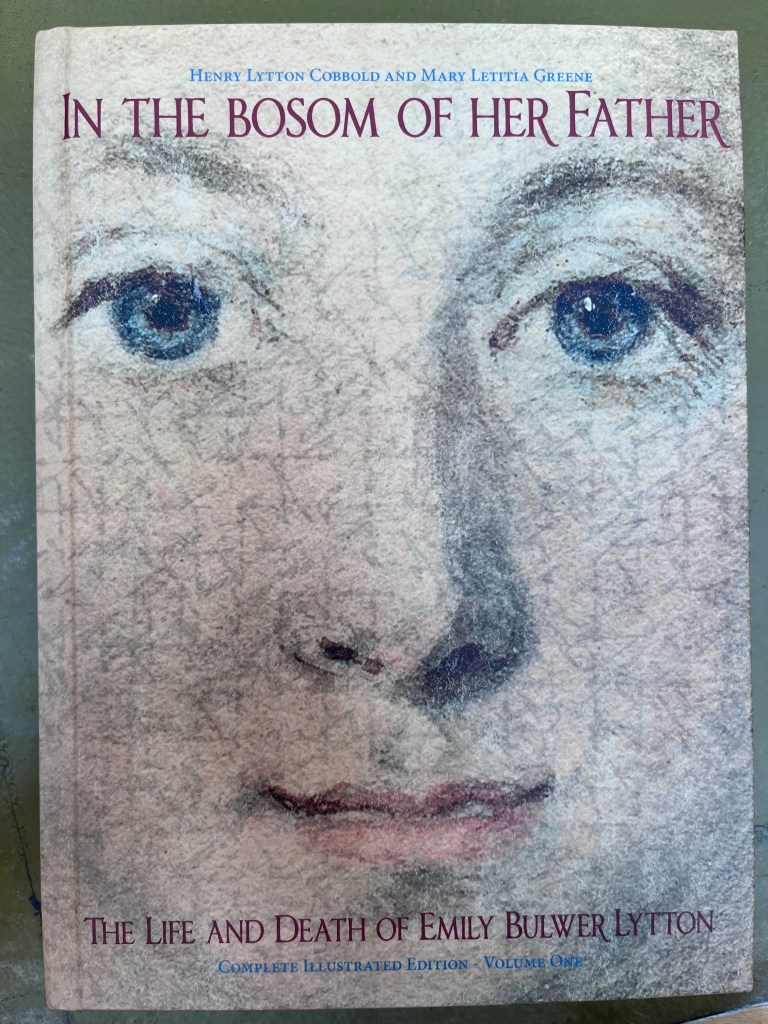
Ancestry.co.uk has a new feature whereby it gives you a score for your family tree based on how accurate they believe it to be. Then it prompts you with names of people in your tree that may be incomplete or duplicated. Everard’s 2x great aunt, Mary Letitia Greene (1787-1859), came up as someone whose details I needed to corroborate. Everard, Dora and I are all descendants of her brother William. When I looked at the ‘hints’ for MLG, one of them was a blog post written about her by Lord Henry Lytton Cobbold of Knebworth House, explaining her connection to his family. On further investigation I found that he had written a book about his ancestor Emily Bulwer-Lytton (1828-48), based on MLG’s writings and crediting her as co-author.
Emily was the daughter of Edward Bulwer Lytton, the most renowned novelist of his day. He gave us phrases such as ‘it was a dark and stormy night,’ and ‘the pen is mightier than the sword.’ He had a tempestuous relationship with his Irish wife, Rosina Wheeler, and neither of them wanted to parent their daughter – she was sent to a wet nurse at a farm 20 miles from their home, within days of her birth on 27 June 1828. We share a birthday, what a coincidence! MLG had been a friend of Rosina since she was 17, and the Greene and Wheeler families lived close to each other near Dublin.
It seems that MLG became a sort of second mother, known as Aunt Mary, to Emily and her little brother Teddy (who later became Viceroy of India) and to two children in her own family – Grace (known as Bonnie, later to become Everard’s grandmother) and Rose Greene. She seemed to be nurse, parent, governess and friend, a constant loving presence in the children’s lives. MLG recorded her experiences of looking after the Bulwer Lytton children until Emily’s tragic death, aged 19, in 1848. Her reminiscences made their way back to Knebworth House in the 1880s, where they lay unread until the 21st century.
Lord Henry Lytton Cobbold became interested in Emily’s story but needed the help of an expert to read MLG’s illegible handwriting. Much of it was “cross-written,” a paper saving device whereby you write across the page first and then overwrite vertically down the page (you can see a sample of it on the cover of Lord Cobbold’s book, above). Eventually, after many readings of the transcribed text, visits to various relevant locations in the UK and Europe, hunting down living connections and visiting graveyards and archives, he was able to write his book, In The Bosom Of Her Father. A key connection was with Jean Greene (1929-2024), who held many relevant Greene family items. She was the wife of Everard’s son, Alfred Greene (1921-2006). At last, an Everard descendant!
I have learned much of this tale through correspondence with Lord Lytton Cobbold, as well as by reading his fascinating and beautifully illustrated book at the National Library of Scotland. He has very kindly helped me to connect with Jean’s daughter, Jenny.
I was amazed to learn that Jenny remembered Dora, having met her many times at Everard’s home, when they all lived in Kensington in the 1950s. Jenny had also spent a family holiday visiting Dora and John at Loch Morar in the 1960s. She solved the mystery of why Everard (whose full name was Christian Augustine Everard Greene) was nicknamed Kitten – apparently, when he was a child, his younger brother couldn’t pronounce the word ‘Christian,’ instead saying Kitten. It was wonderful to bring the close relationship between Everard and Dora to life with these intimate details! Jenny also mentioned that one of her sons is a professor of statistics and was a founding director of the Alan Turing Institute, connecting him back to BTM’s role in the Second World War. The apple doesn’t fall far from the tree!
Another interesting snippet from Lord Cobbold’s research is that a relative of ours called Elizabeth Greene was mother to James Patten, Captain Cook’s surgeon. Patten accompanied Cook on his second voyage, aboard HMS Resolution, and saved his life after Cook fell ill near Antarctica. It seems that the Greene family has a long and intriguing history!
Dora Metcalf would be 134 on 11 March 2026 and, for her birthday, I’m pleased to announce that I have secured a publisher for my novel based on her life!
The Book Guild is a hybrid publisher who will provide editing, typesetting, cover design, printing and all the necessary behind-the-scenes services to enable the book to appear online (Amazon etc), as a paperback in UK bookshops and via print on demand internationally. Most importantly, they will promote the book in the trade and to the public. Probably the whole process will take 9-12 months, but I’ll know more when I have spoken to their production controller.
If you want to be kept informed as to the book’s progress, be the first to see the cover design and learn the launch date, please sign up by clicking the subscribe button at the foot of the page. If you can’t see it here, go to the home page or the contact page and you’ll see it.
It has taken a long time to reach this stage. Ongoing research into Dora’s story, learning novel craft, getting feedback from various writing professionals and working full time have made for slow progress. Added to that, finding a suitable publisher has taken some time. Dora’s story is unique and thrilling but it doesn’t fit into popular categories such as fantasy, romance or crime, so it has proven to be a harder sell than I anticipated. With 3,500 books published in the UK each week it is an extremely crowded marketplace, so I suppose I shouldn’t be surprised. At last, though, a publisher has seen its potential and will bring it to market. Hurrah!
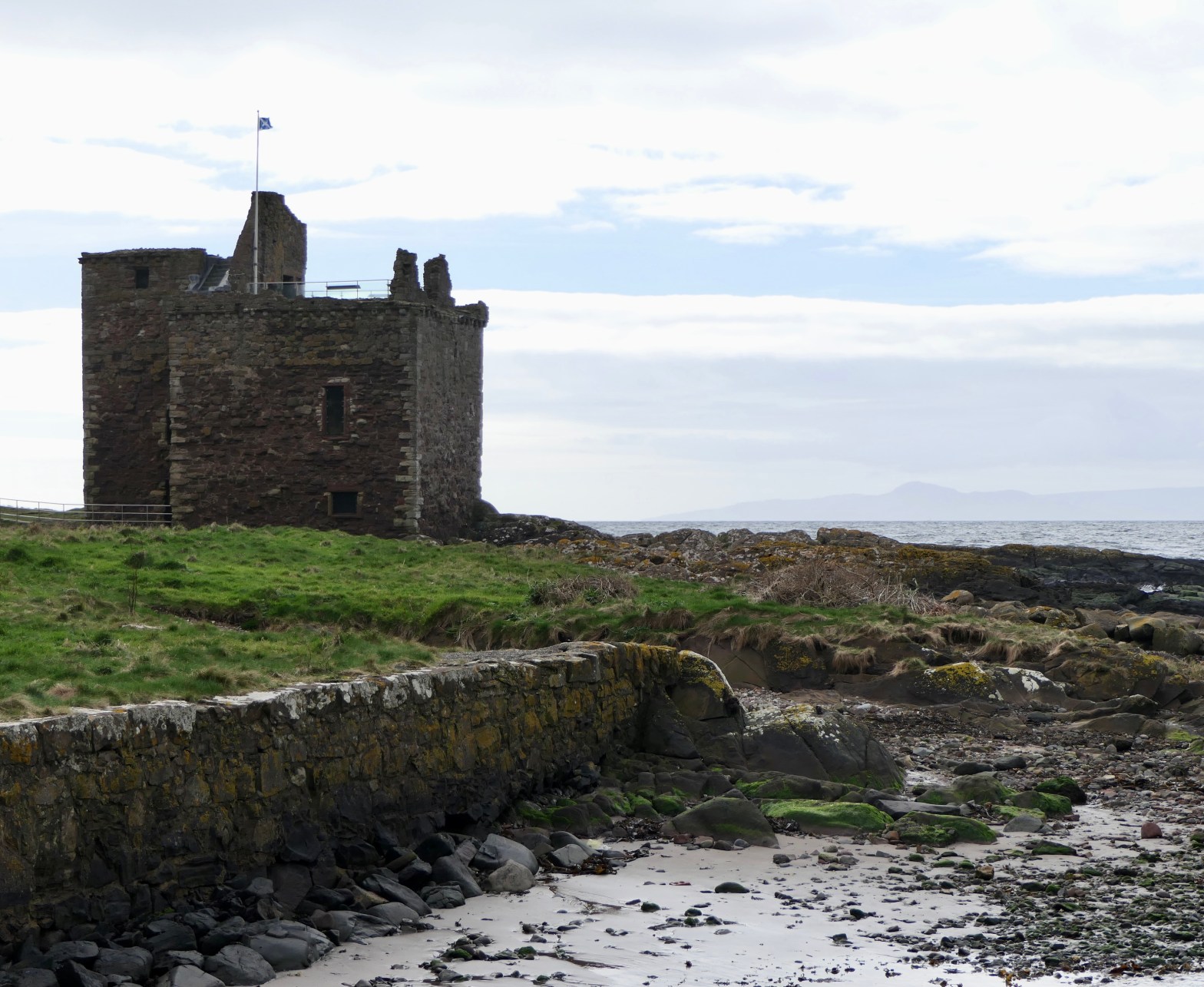
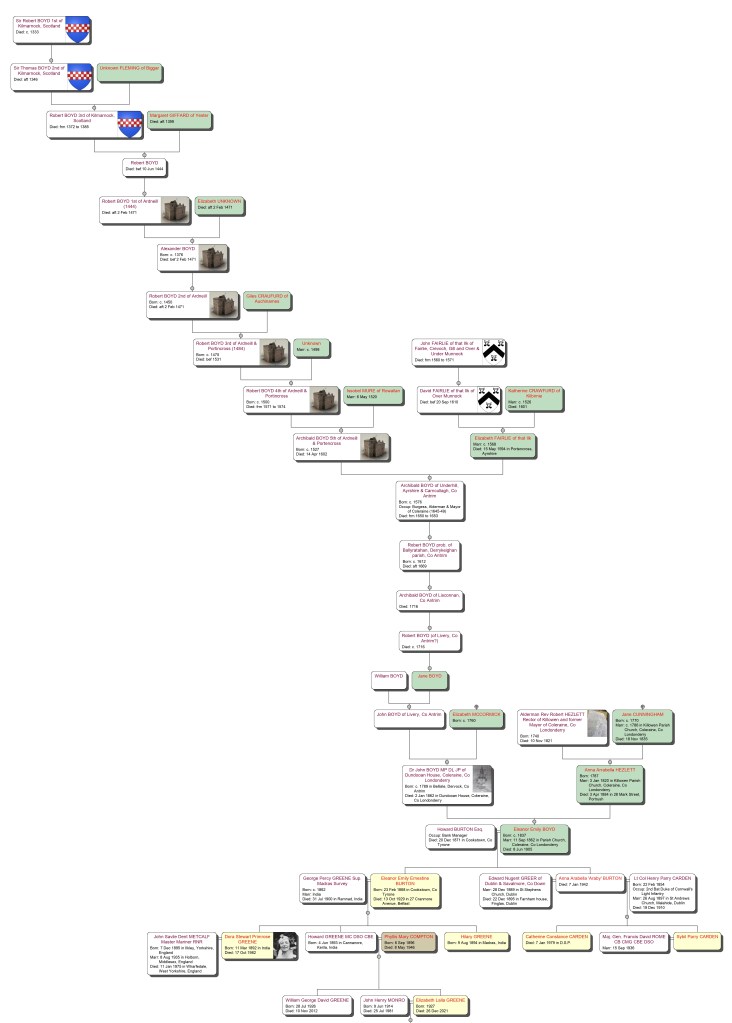
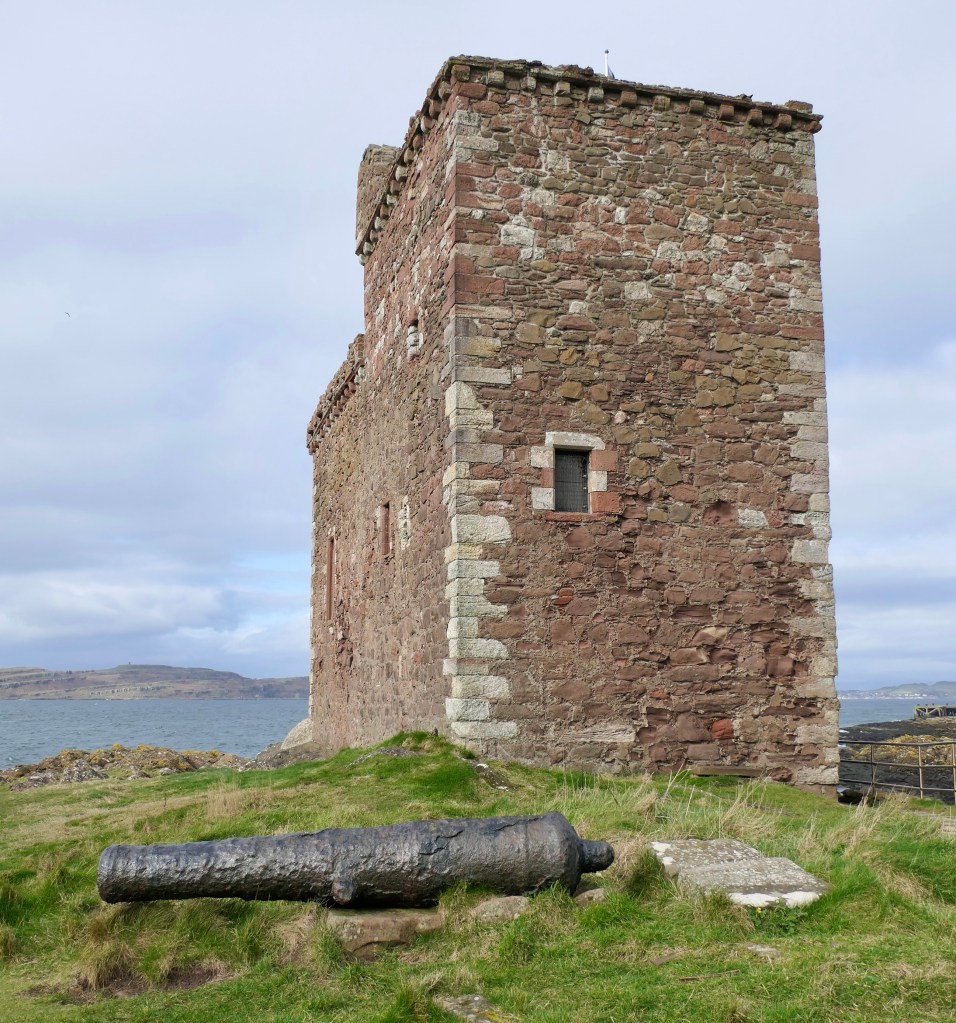
My great, great grandfather and Dora’s grandfather was Dr John Boyd, MP for Coleraine in Northern Ireland in the mid 19th century. My post about searching for his grave led to contact from a historian of the Boyd family. He recently shared with me a family tree going back to Sir Robert Boyd (died 1333), who was a knight of Robert the Bruce. King Robert gifted land near West Kilbride in Ayrshire to his faithful knight after victory at Bannockburn and the Boyds built a castle there. Portencross castle still stands today!
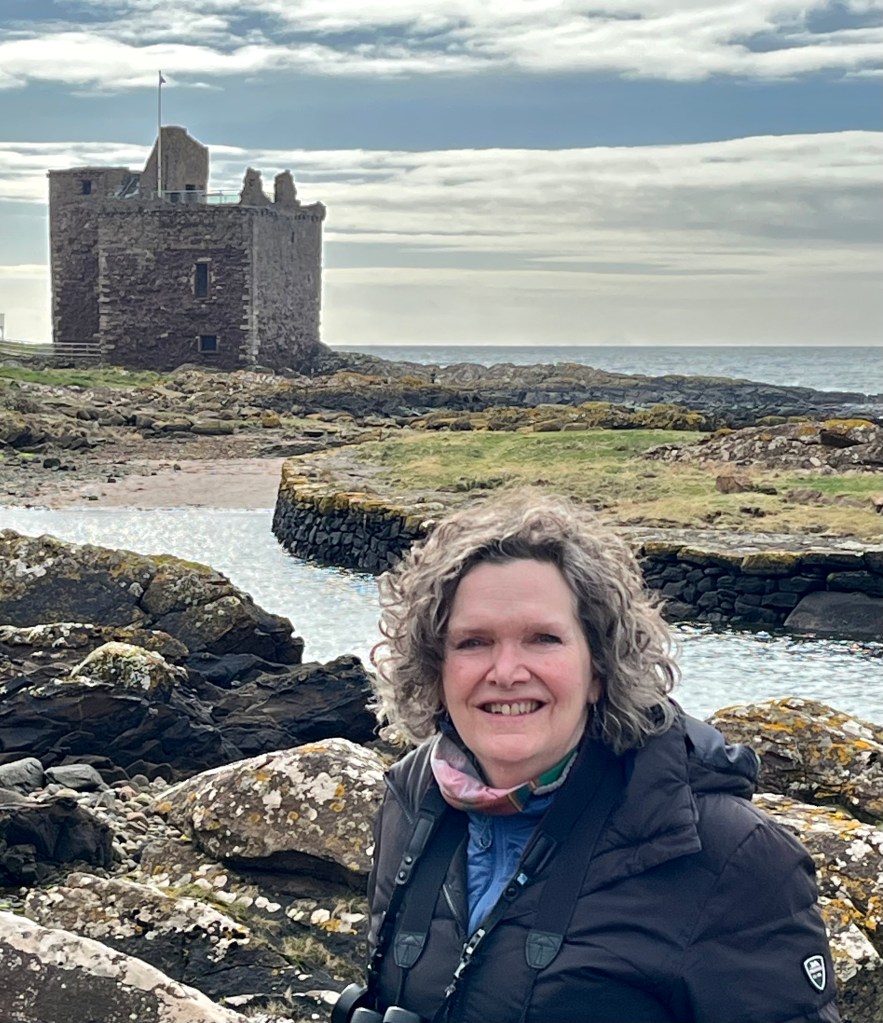
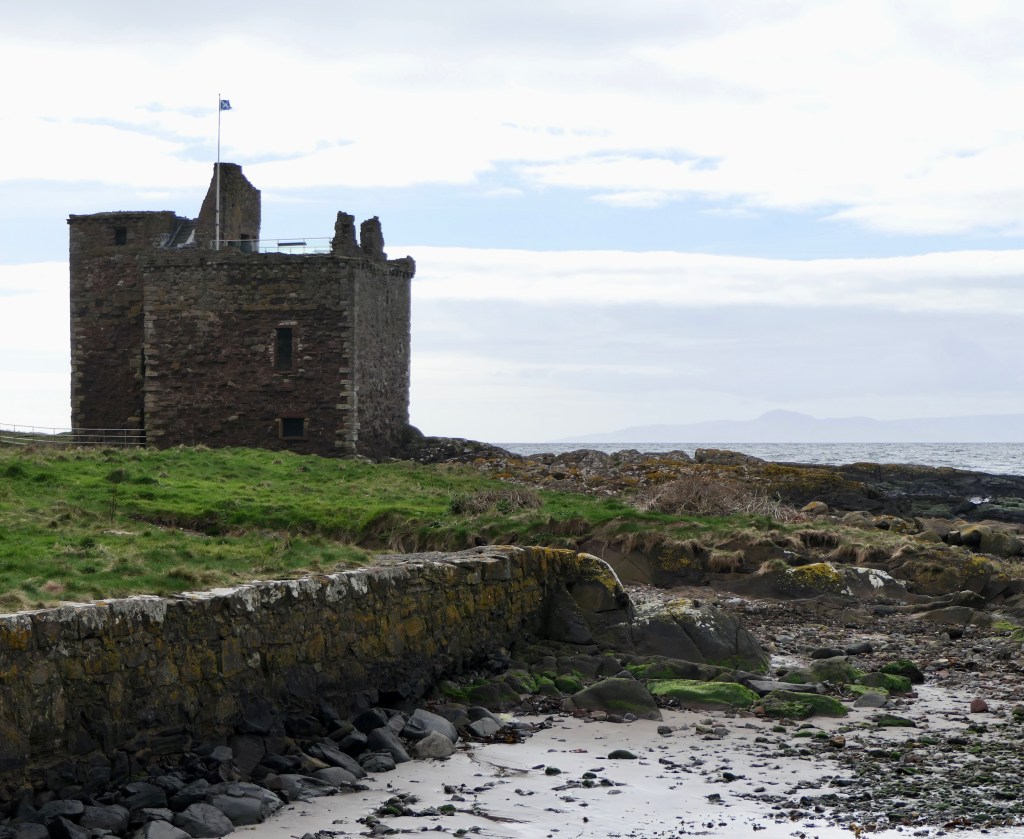
Yesterday we went over to the west coast and walked to the castle. It stands on a rocky promontory looking across the Firth of Clyde to the isles of Arran and Bute. Supposedly Portencross was where the ancient kings of Scotland lay in state before being taken to Iona for burial. Certainly it has a commanding view and a well fortified sense of peace. Over the last 20 years the castle has been renovated by the Friends of Portencross Castle and it is now open to visitors in the summer months. I knew I had Scottish ancestry on my father’s side but I hadn’t realised that it goes back centuries on both sides!
Portencross Castle, Ayrshire
There is a deep (but not always happy) connection between Southwest Scotland and Northern Ireland, separated by a short stretch of sea. The first member of our branch of the Boyd family to leave Scotland was Archibald Boyd (1576-1650), who became mayor of Coleraine. More recently, Dora spent her life between Belfast, Dublin and London, before retiring to the Scottish Highlands. Since moving to Scotland in 2020, I have always felt at ease here. There’s something that seems to call us home.
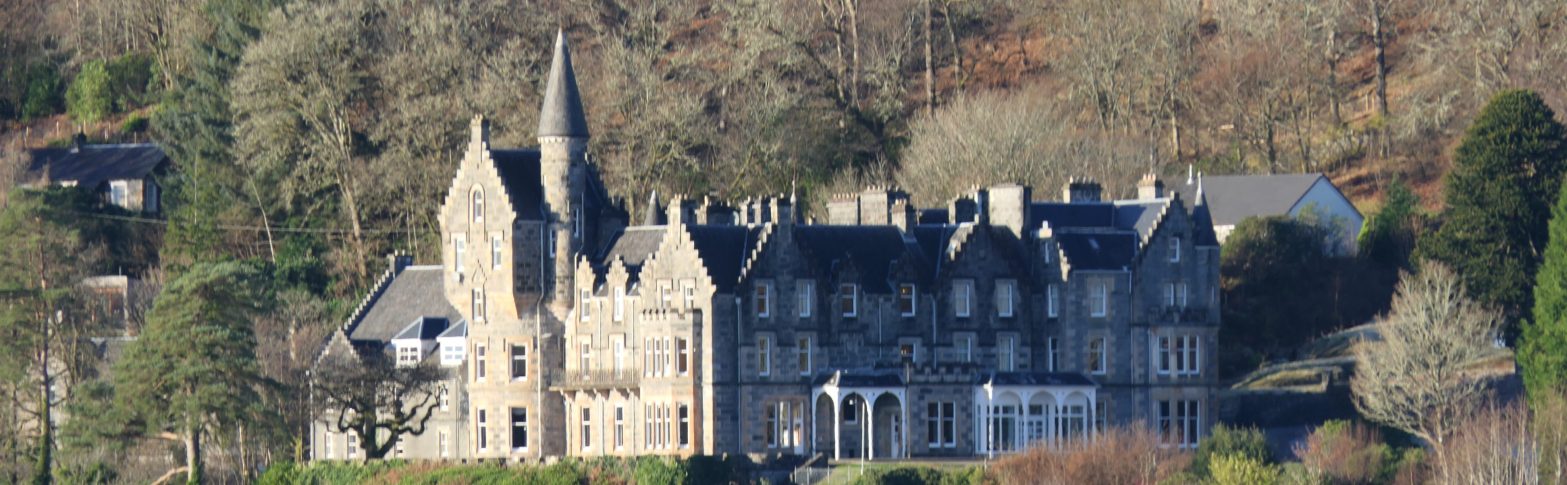
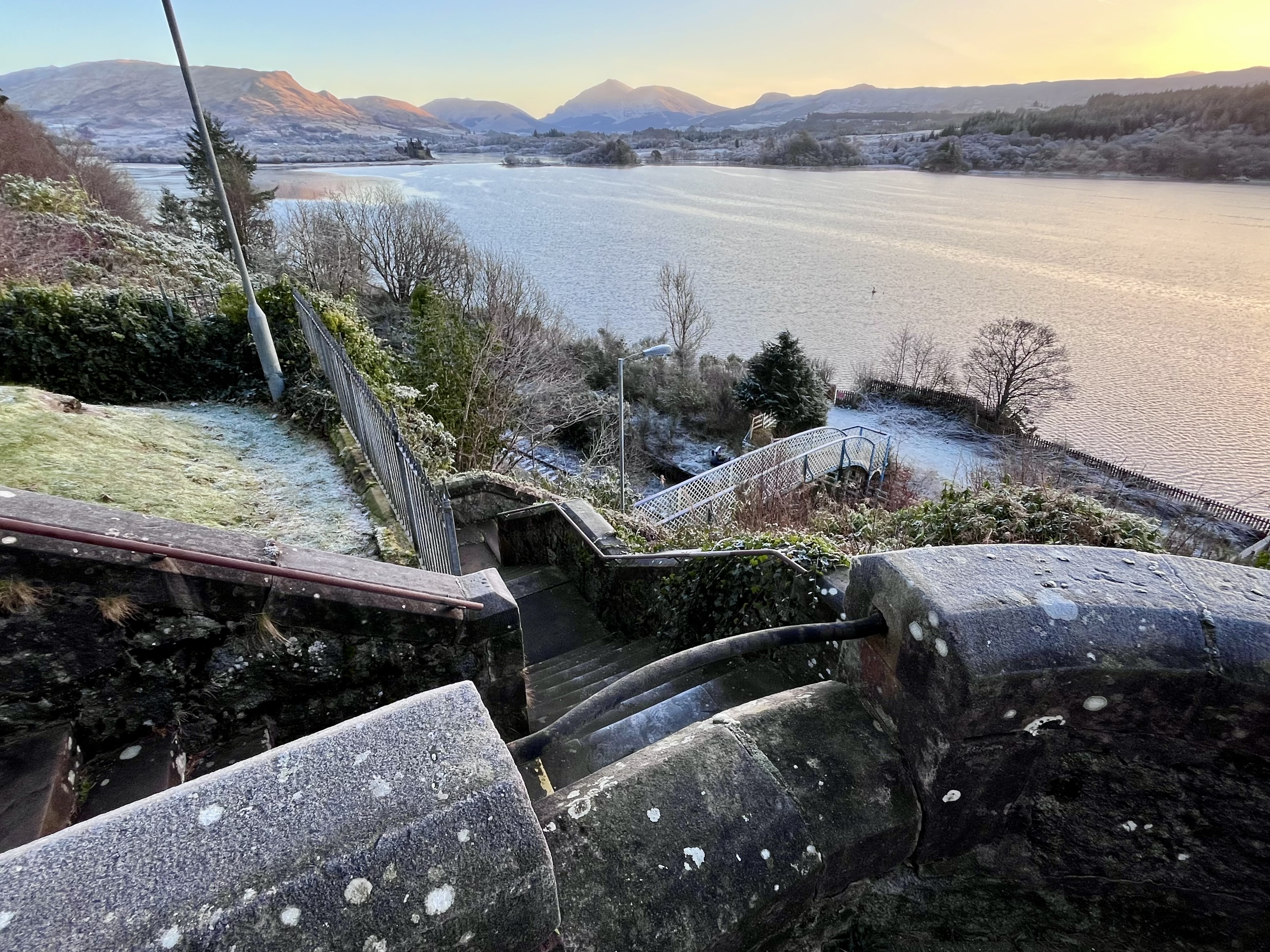
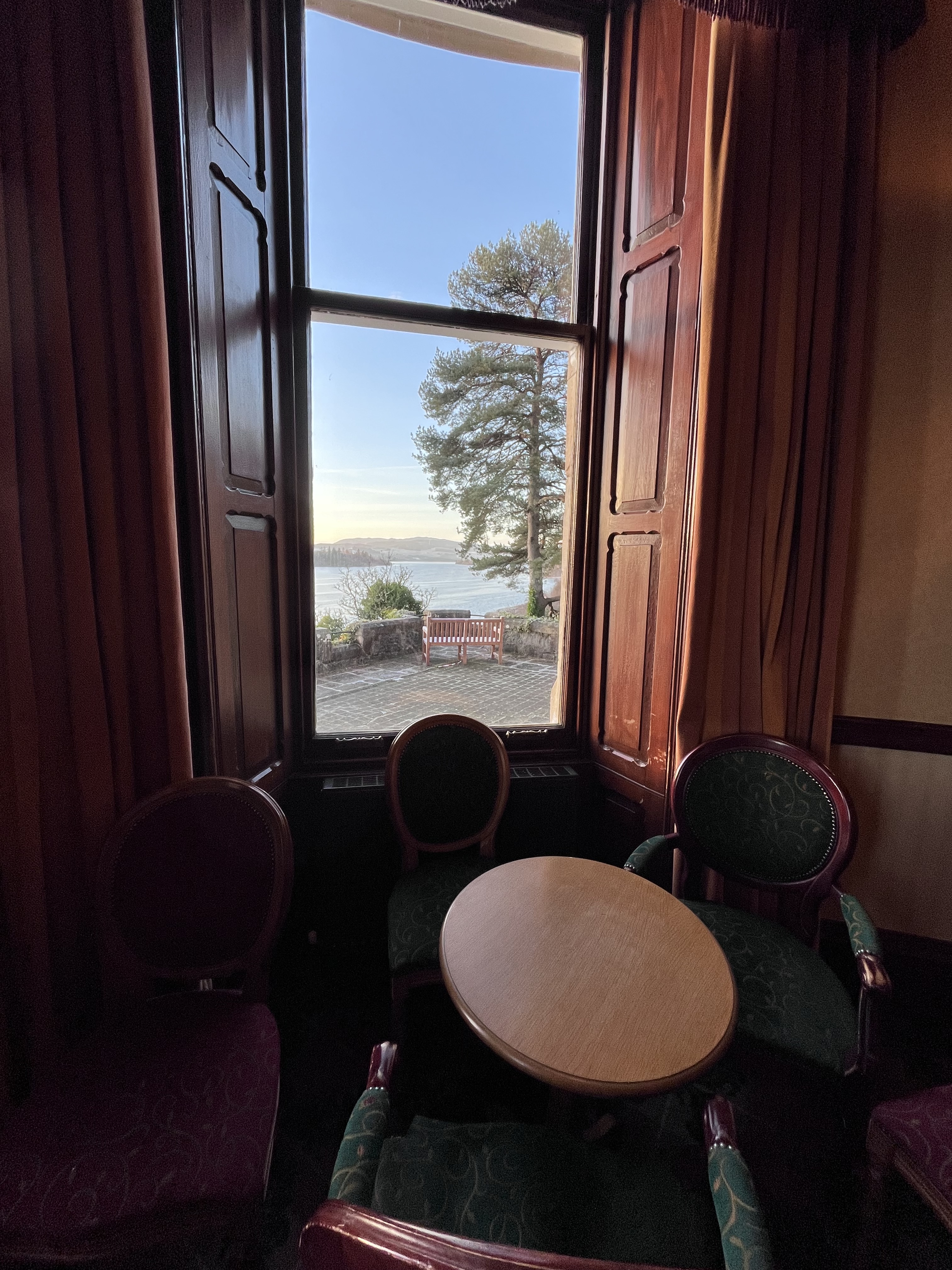
In my novel about Dora, she and John get engaged at the Loch Awe Hotel in the Scottish Highlands in March 1935. Loch Awe is the longest freshwater loch in Scotland, at 41km, but is only 1km wide. It is renowned for its trout and so was an obvious destination for the couple, fishing being their favourite pastime. The hotel is easily reached by train from Glasgow, simplifying the long journey from their London home. Steps from the station lead directly up to the hotel’s main entrance and a terrace overlooking the loch.
Last week we passed by the hotel on our way home from a short break to Oban. It was a clear, crisp December day, with a hoar frost giving the whole scene a magical look.
The receptionist very kindly showed me the dining room and bar, where I imagined that John and Dora spent their evenings after a cold day’s fishing on the loch. It was in a private corner of the dining room that John bends his knee and asks Dora to marry him, after a long courtship. He could never replace Hugh, the love of her life who was lost at Gallipoli in 1915, but John had earned her love and respect since they’d met in 1931.
The hotel retains much of its Victorian character and I was amused to see that there was mistletoe hanging from the chandelier in the bar – a romantic resonance with my story!
Rereading Dora’s handwritten notes, I have discovered another hotel that features in the story. In August 1939, John summons Dora to meet him in Copenhagen, where he is piloting a cruise to the Northern Capitals for the Orient Line. War is about to begin and he needs to tell her about his newly received orders to return to the Royal Naval Reserve. They stay at the Hotel Phoenix, in the centre of the city, not far from the harbour. This grand, 19th century hotel would be confiscated by the Nazis during the war and later became home to the Danish Communist Party. It was turned back into a hotel in 1990 and was restored to its former elegance and luxury. Might have to go and have a look at it, as a trip to Copenhagen is on the cards this spring!
There is a group of editors called the Wiki Women in Red (WWR) who aim to address the gender bias in Wikipedia’s profiles of ‘notable people.’ Since 2014, when only 15.5% of profiles in English language Wikipedia were about women, they have steadily added more, including Dora, so that now over 20% of profiles are about women. Quite an achievement but still a way to go!
Social media is a mixed blessing but it recently connected me to one of these WWR editors. I was pleased to be able to thank somebody for adding Dora and she also told me that Dora’s Wikipedia page has been viewed 6,276 times since it went live three years ago. I’m thrilled! Gone but not forgotten, and probably a better commemoration of her life than a headstone on her grave.
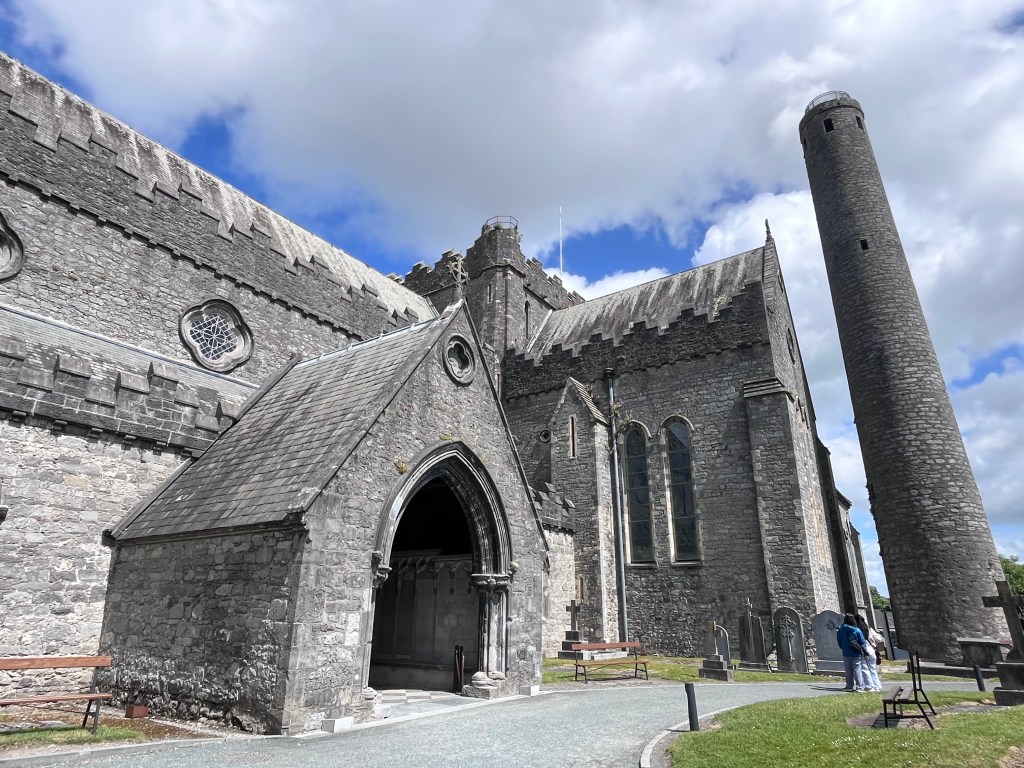
This year I spoke about Dora at the Women’s History Association of Ireland conference in May, which also allowed me to meet up with my Irish cousin, Sandra. She added to my knowledge of my Irish family history, which was really helpful. And we had great fun visiting Hook Head! On the way back to Dublin I stopped at Kilkenny to admire the round tower at St Canice’s cathedral. Round towers are a recurring detail of Dora’s life – there’s one at Glendalough and another at Loch Morar.
I have been rewriting my novel about Dora, taking advantage of a week at the Moniack Mhor writers’ retreat centre near Inverness. It was great to be among writers and they helped me find a new and better title for the book. It’s now called A Bitter Equation and I am trying to find a publisher for it.
In the autumn I was interviewed about Dora for the Infinite Women podcast. The episode is due to air in Spring 2026 – I will keep you posted! It’s great that there are so many individuals, groups and organisations now celebrating women in history and raising awareness of their achievements.
Today is International Women in Mathematics day and Dora is being commemorated at the Women’s History Scotland blog. I’m so pleased to see her remarkable story getting some airtime, this time focusing on her Scottish connections and the mystery of why she chose to retire to a remote house at Loch Morar.
It’s beautiful in the West Highlands and Dora and her husband John loved fishing, but a house on the loch with no electricity or road access seems quite a challenge for a woman of 70. After a lifetime of building an international business, developing budgetary control, management planning and scientific analysis using machine calculation, perhaps she longed for peace. But the house had been used by the Special Operations Executive for training the Norwegian resistance. Did her secret work in WW2 connect her with someone who knew the house? Did John’s Norwegian colleague, Larsen, tell them about it?
Next week I am speaking about Dora at the Women’s History Association of Ireland’s conference. I’m focusing on her response to loss. She lost her father when she was 8 years old, and both her parents lost their fathers as young children too. These losses prompted her mother to ensure that Dora and her siblings had the best education she could afford, to cushion them from destitution.
Then when Dora lost her fiancé, Hugh Cass, at Gallipoli in 1915, it proved to be the formative crisis in her life. Her future as wife and mother evaporated and instead she used her mathematical skills and entrepreneurial spirit to build a career for herself. But her story is largely lost to history and I am also talking about this at the WHAI conference. Sadly, it is extremely common for women’s achievements to be overlooked or ignored, so I am sure I will have a sympathetic audience!
I’ve been researching and writing Dora’s story for several years now. Trying to find a publisher for my novel about her is a depressing and, so far, unsuccessful marathon. However, I entered a biography competition with the Society of Women Writers and Journalists (SWWJ), in spite of it all, and found some writing success at last!
They only wanted 1500 words but I have written so many synopses and blog posts that I found it quite easy to tell her story in these few words. I didn’t win the competition but my entry was Highly Commended, which pleased me.
The judges said: ‘This piece is an unearthing and airing of what is – regrettably – a barely-known history. Portraying Dora’s personal and professional development in the face of adversity, it also evokes an era of advancement and relative liberation for women in Britain and Ireland. The strong, affecting opening (the loss of Dora’s fiancé at Gallipoli) suggests that the story will go in one direction, but in fact it expands to become something quite different, just as Dora’s life did.’
Just as well I didn’t win, as the prize is being presented at the House of Lords on May 1st, when I will be away. Phew! It was good to have the importance of Dora’s story acknowledged and I was pleased that the key themes came across clearly.
I look forward to reading the winning entry, about a pioneering, Bauhaus trained woman called Lotte Stam-Beese, who was Chief Architect for the rebuilding of Rotterdam after the Second World War.