Dora Metcalf would be 134 on 11 March 2026 and, for her birthday, I’m pleased to announce that I have secured a publisher for my novel based on her life!
The Book Guild is a hybrid publisher who will provide editing, typesetting, cover design, printing and all the necessary behind-the-scenes services to enable the book to appear online (Amazon etc), as a paperback in UK bookshops and via print on demand internationally. Most importantly, they will promote the book in the trade and to the public. Probably the whole process will take 9-12 months, but I’ll know more when I have spoken to their production controller.
If you want to be kept informed as to the book’s progress, be the first to see the cover design and learn the launch date, please sign up by clicking the subscribe button at the foot of the page. If you can’t see it here, go to the home page or the contact page and you’ll see it.
It has taken a long time to reach this stage. Ongoing research into Dora’s story, learning novel craft, getting feedback from various writing professionals and working full time have made for slow progress. Added to that, finding a suitable publisher has taken some time. Dora’s story is unique and thrilling but it doesn’t fit into popular categories such as fantasy, romance or crime, so it has proven to be a harder sell than I anticipated. With 3,500 books published in the UK each week it is an extremely crowded marketplace, so I suppose I shouldn’t be surprised. At last, though, a publisher has seen its potential and will bring it to market. Hurrah!
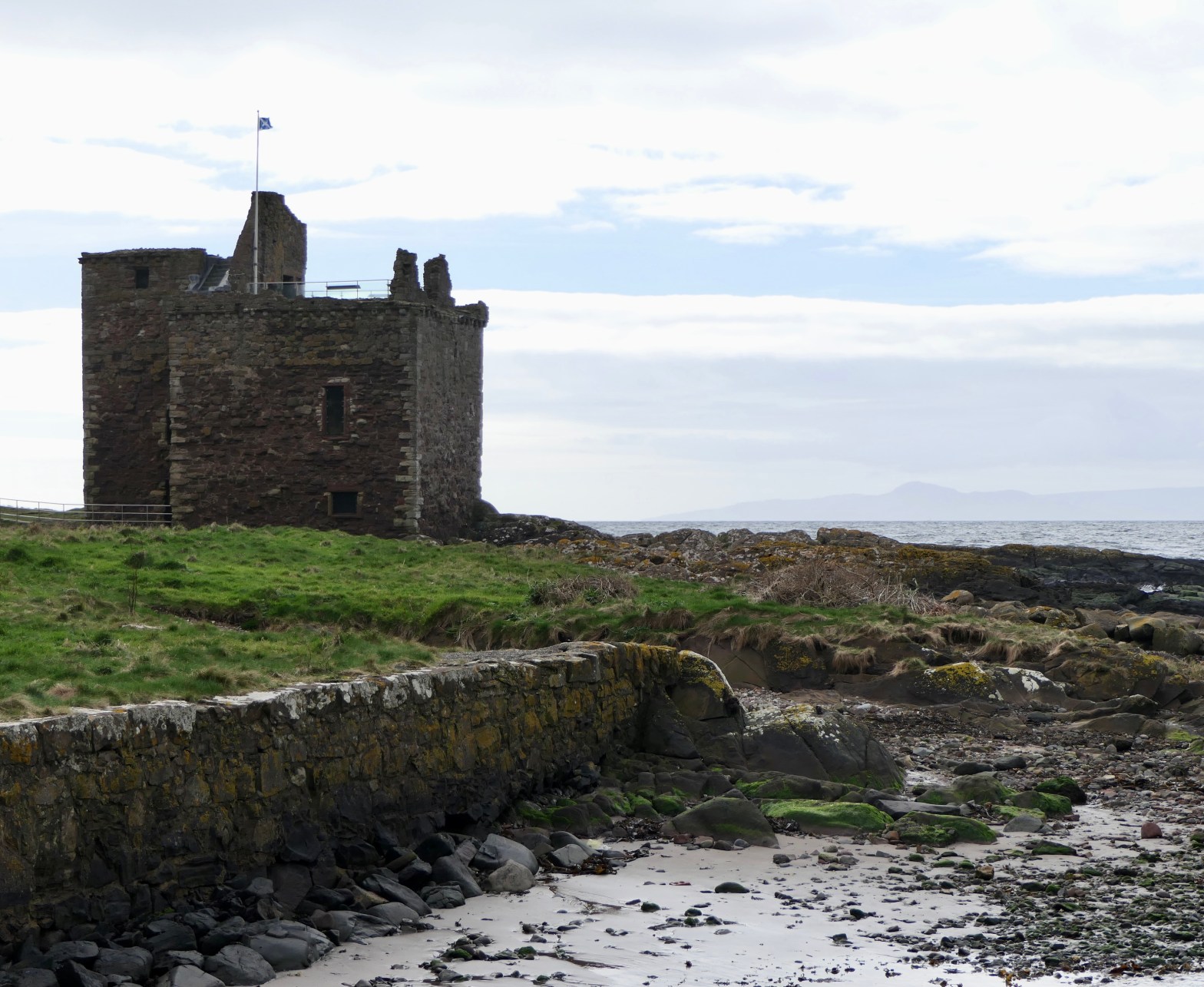
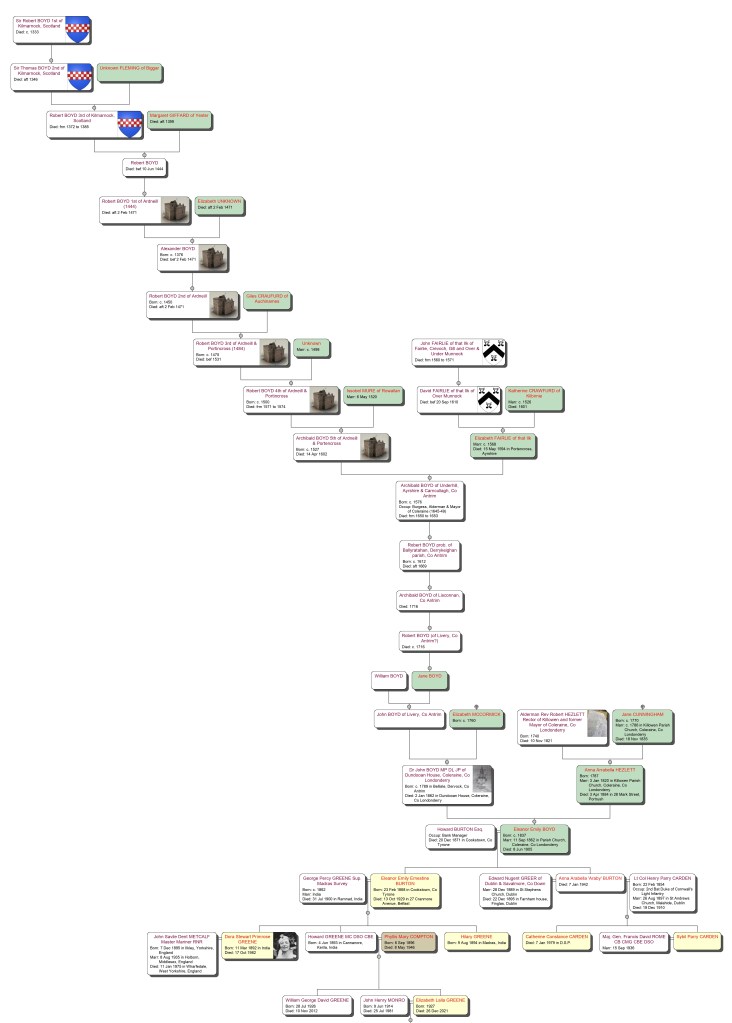
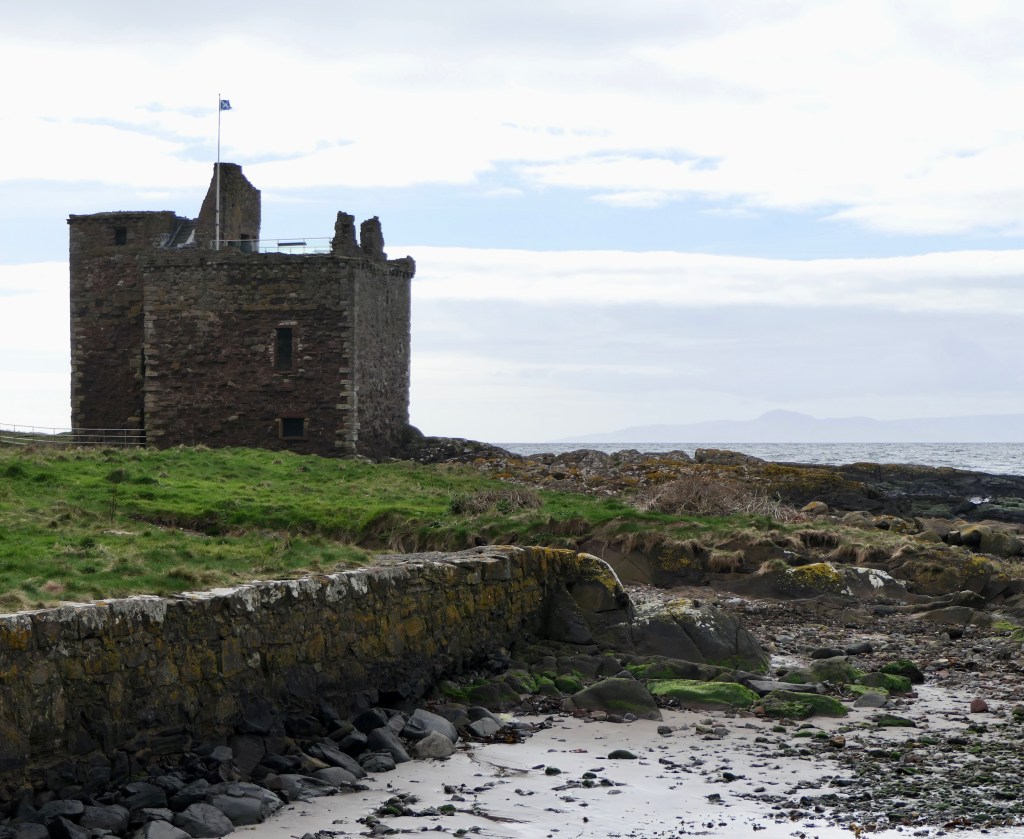
My great, great grandfather and Dora’s grandfather was Dr John Boyd, MP for Coleraine in Northern Ireland in the mid 19th century. My post about searching for his grave led to contact from a historian of the Boyd family. He recently shared with me a family tree going back to Sir Robert Boyd (died 1333), who was a knight of Robert the Bruce. King Robert gifted land near West Kilbride in Ayrshire to his faithful knight after victory at Bannockburn and the Boyds built a castle there. Portencross castle still stands today!
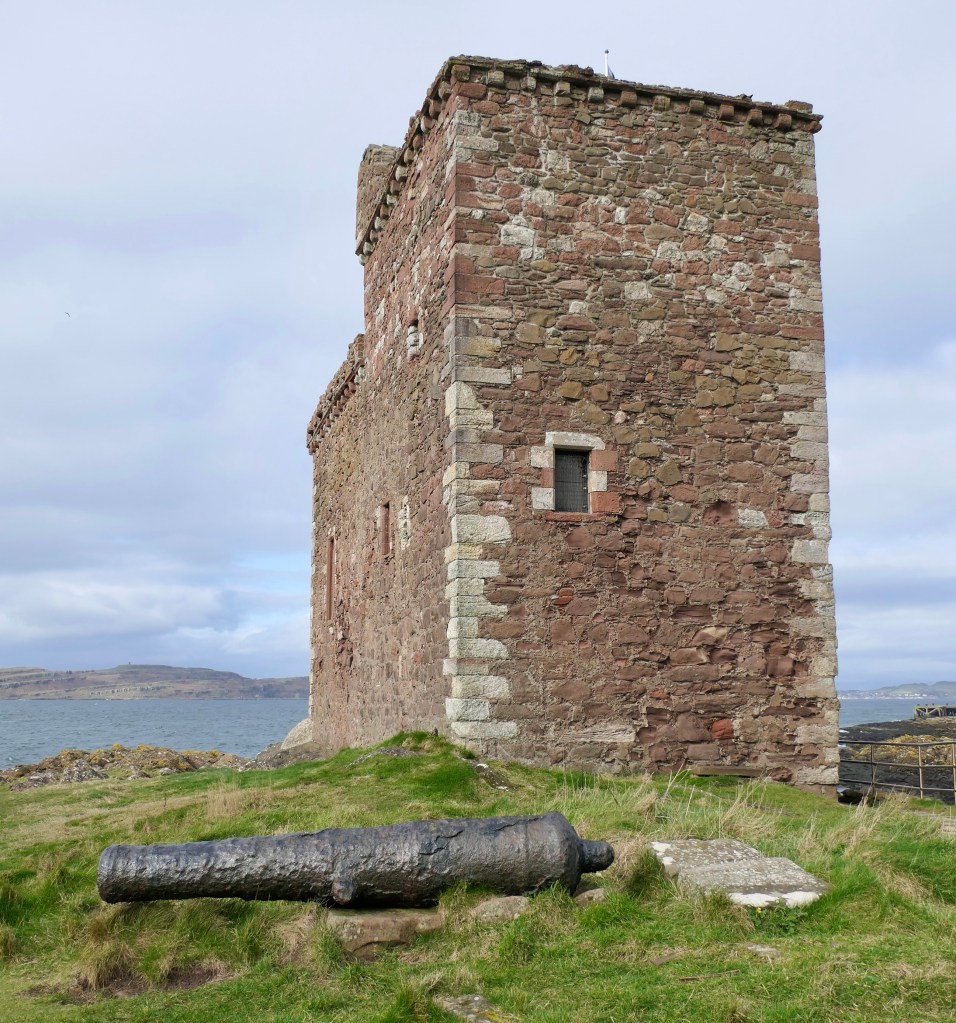
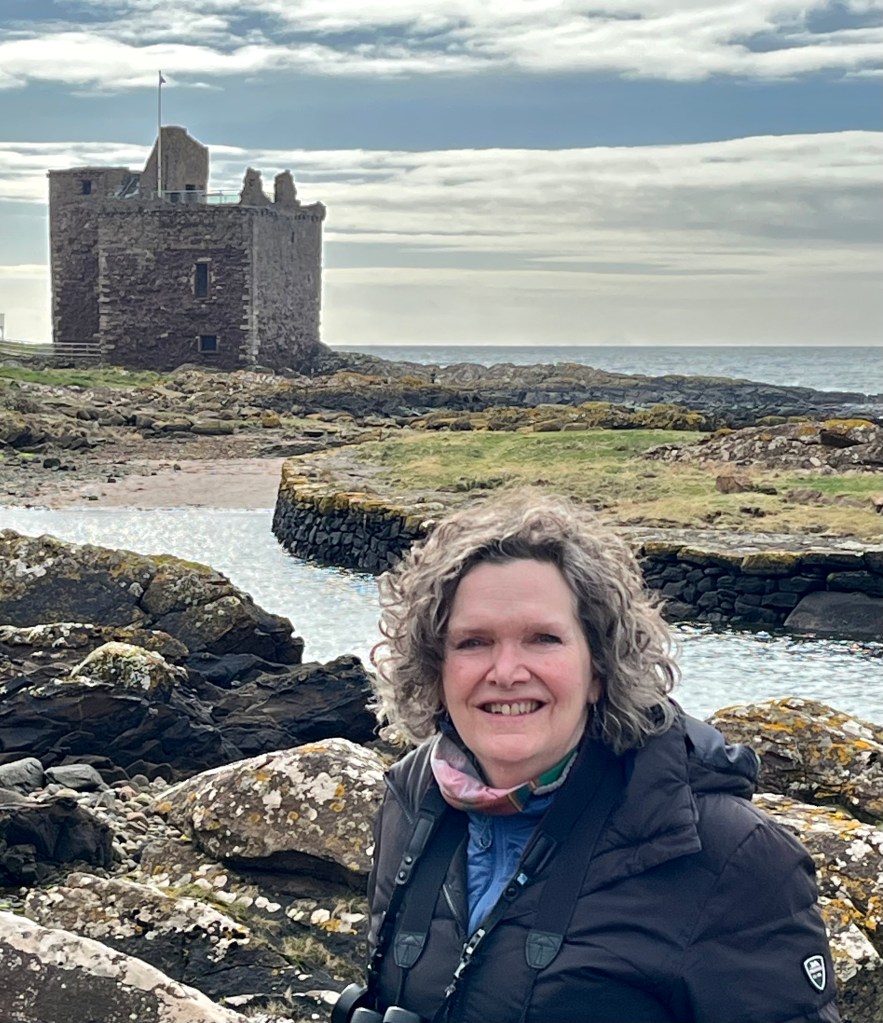
Yesterday we went over to the west coast and walked to the castle. It stands on a rocky promontory looking across the Firth of Clyde to the isles of Arran and Bute. Supposedly Portencross was where the ancient kings of Scotland lay in state before being taken to Iona for burial. Certainly it has a commanding view and a well fortified sense of peace. Over the last 20 years the castle has been renovated by the Friends of Portencross Castle and it is now open to visitors in the summer months. I knew I had Scottish ancestry on my father’s side but I hadn’t realised that it goes back centuries on both sides!
Portencross Castle, Ayrshire
There is a deep (but not always happy) connection between Southwest Scotland and Northern Ireland, separated by a short stretch of sea. The first member of our branch of the Boyd family to leave Scotland was Archibald Boyd (1576-1650), who became mayor of Coleraine. More recently, Dora spent her life between Belfast, Dublin and London, before retiring to the Scottish Highlands. Since moving to Scotland in 2020, I have always felt at ease here. There’s something that seems to call us home.
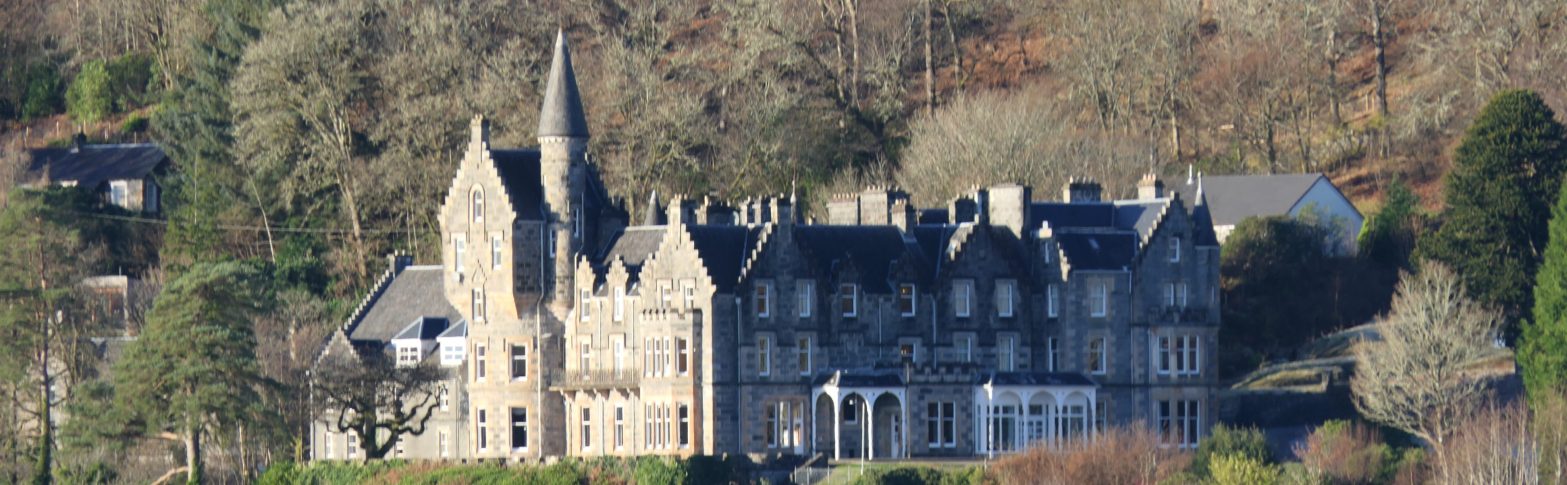
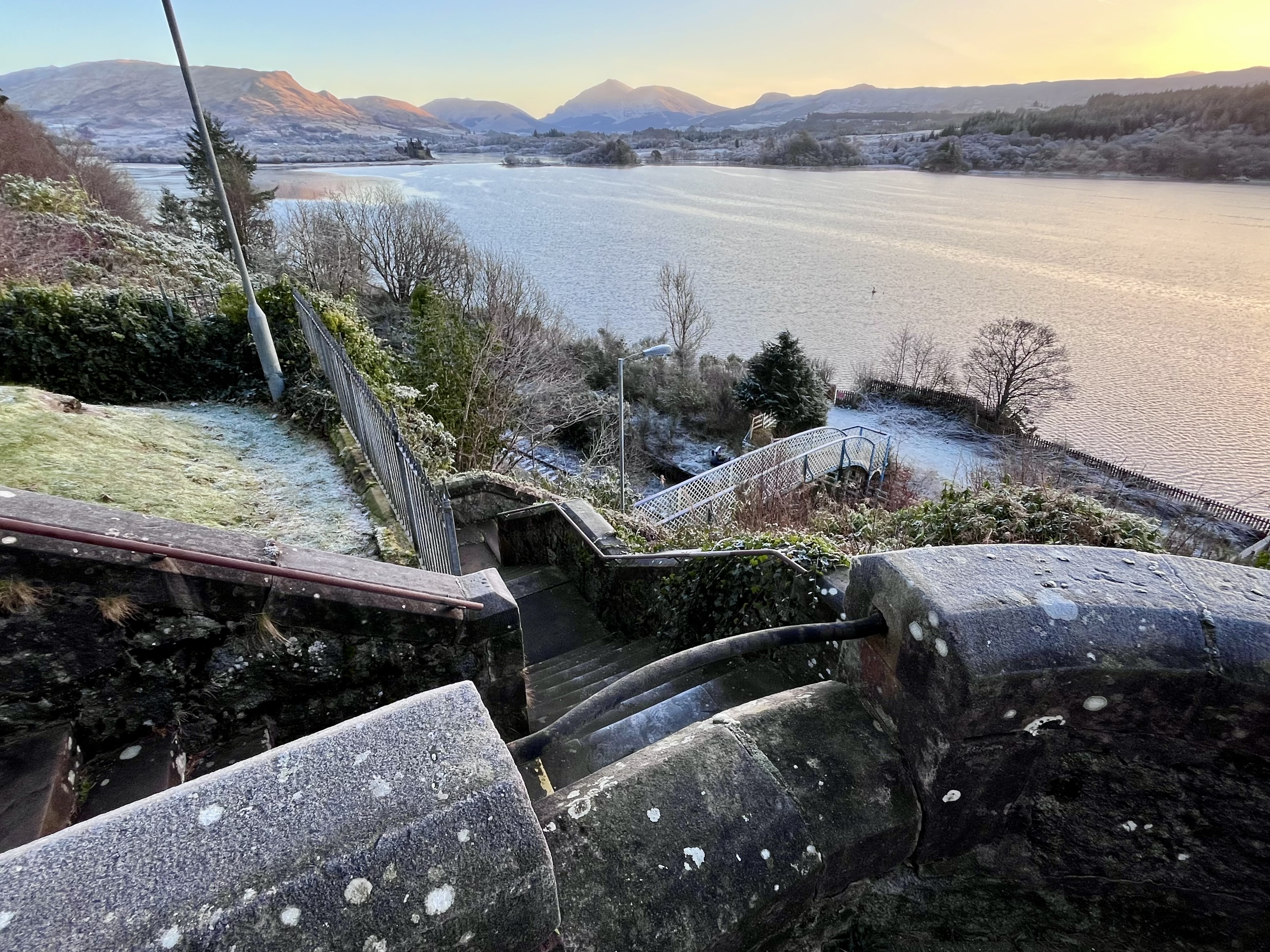
In my novel about Dora, she and John get engaged at the Loch Awe Hotel in the Scottish Highlands in March 1935. Loch Awe is the longest freshwater loch in Scotland, at 41km, but is only 1km wide. It is renowned for its trout and so was an obvious destination for the couple, fishing being their favourite pastime. The hotel is easily reached by train from Glasgow, simplifying the long journey from their London home. Steps from the station lead directly up to the hotel’s main entrance and a terrace overlooking the loch.
Last week we passed by the hotel on our way home from a short break to Oban. It was a clear, crisp December day, with a hoar frost giving the whole scene a magical look.
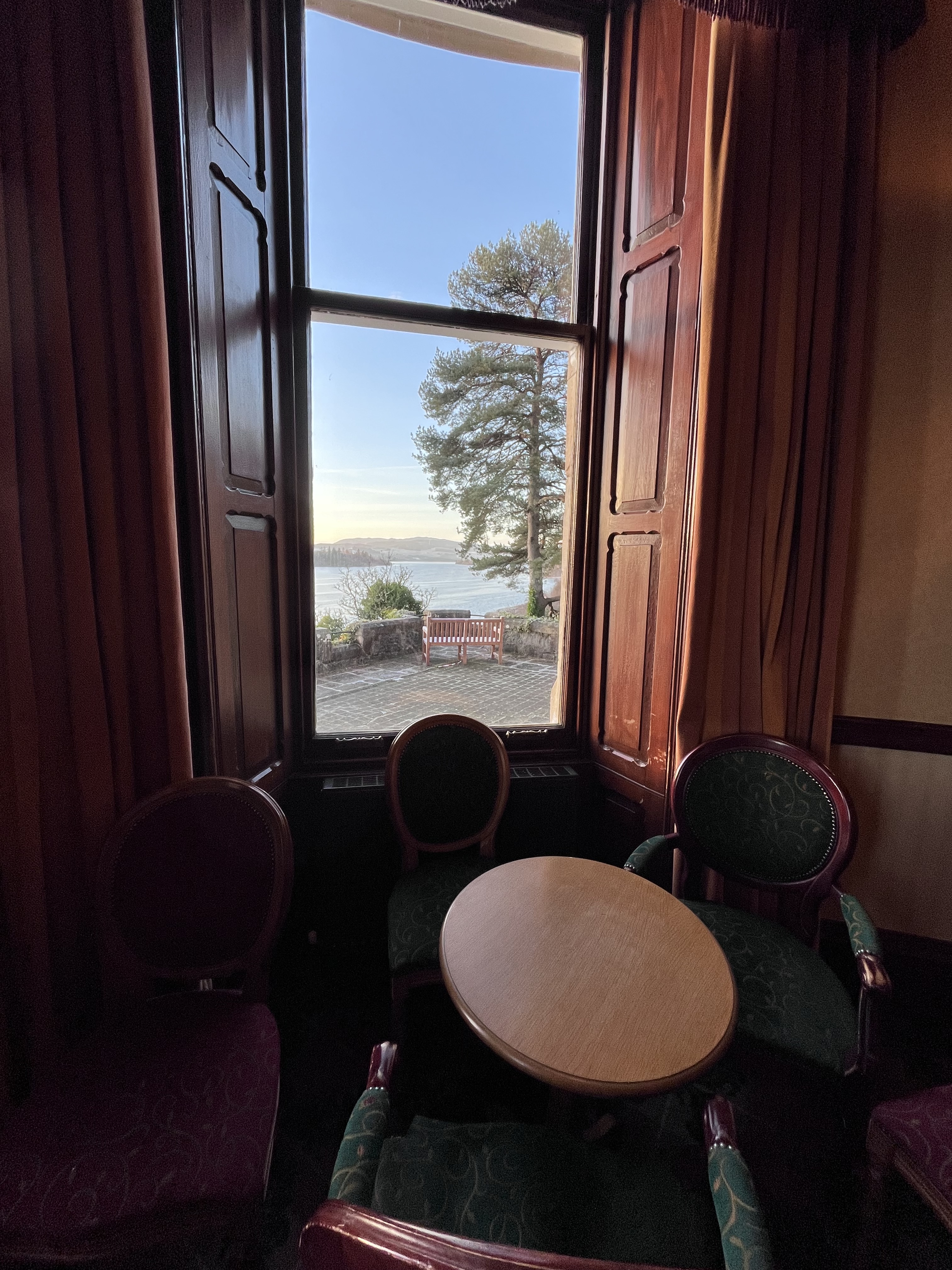
The receptionist very kindly showed me the dining room and bar, where I imagined that John and Dora spent their evenings after a cold day’s fishing on the loch. It was in a private corner of the dining room that John bends his knee and asks Dora to marry him, after a long courtship. He could never replace Hugh, the love of her life who was lost at Gallipoli in 1915, but John had earned her love and respect since they’d met in 1931.
The hotel retains much of its Victorian character and I was amused to see that there was mistletoe hanging from the chandelier in the bar – a romantic resonance with my story!
Rereading Dora’s handwritten notes, I have discovered another hotel that features in the story. In August 1939, John summons Dora to meet him in Copenhagen, where he is piloting a cruise to the Northern Capitals for the Orient Line. War is about to begin and he needs to tell her about his newly received orders to return to the Royal Naval Reserve. They stay at the Hotel Phoenix, in the centre of the city, not far from the harbour. This grand, 19th century hotel would be confiscated by the Nazis during the war and later became home to the Danish Communist Party. It was turned back into a hotel in 1990 and was restored to its former elegance and luxury. Might have to go and have a look at it, as a trip to Copenhagen is on the cards this spring!
There is a group of editors called the Wiki Women in Red (WWR) who aim to address the gender bias in Wikipedia’s profiles of ‘notable people.’ Since 2014, when only 15.5% of profiles in English language Wikipedia were about women, they have steadily added more, including Dora, so that now over 20% of profiles are about women. Quite an achievement but still a way to go!
Social media is a mixed blessing but it recently connected me to one of these WWR editors. I was pleased to be able to thank somebody for adding Dora and she also told me that Dora’s Wikipedia page has been viewed 6,276 times since it went live three years ago. I’m thrilled! Gone but not forgotten, and probably a better commemoration of her life than a headstone on her grave.
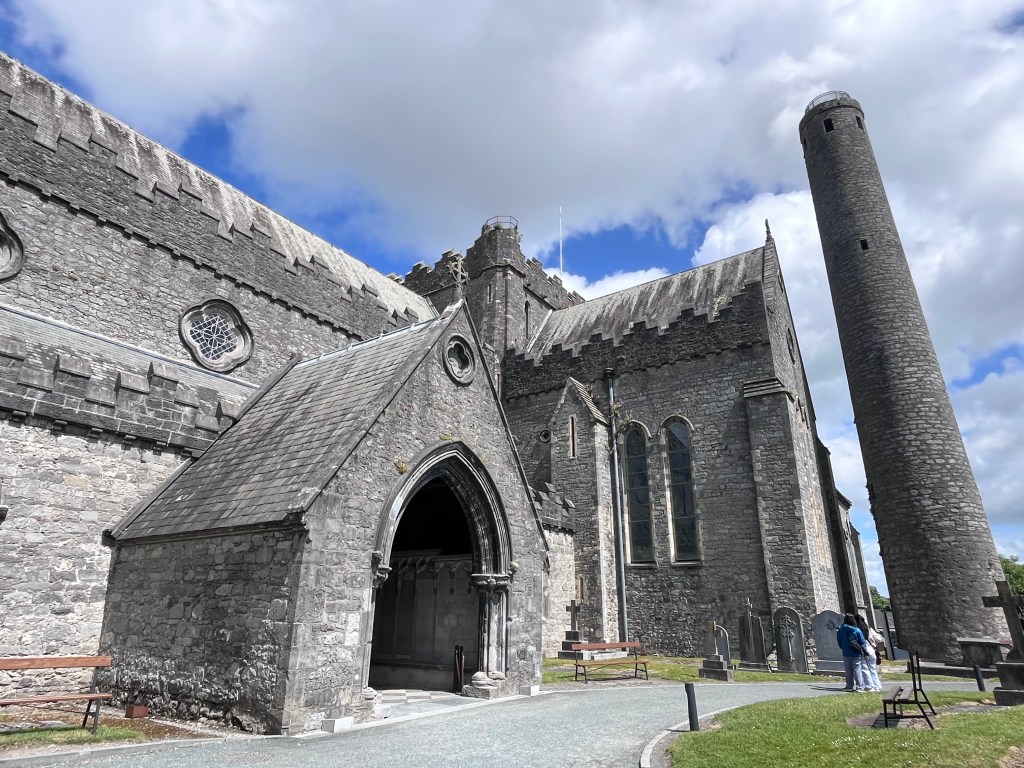
This year I spoke about Dora at the Women’s History Association of Ireland conference in May, which also allowed me to meet up with my Irish cousin, Sandra. She added to my knowledge of my Irish family history, which was really helpful. And we had great fun visiting Hook Head! On the way back to Dublin I stopped at Kilkenny to admire the round tower at St Canice’s cathedral. Round towers are a recurring detail of Dora’s life – there’s one at Glendalough and another at Loch Morar.
I have been rewriting my novel about Dora, taking advantage of a week at the Moniack Mhor writers’ retreat centre near Inverness. It was great to be among writers and they helped me find a new and better title for the book. It’s now called A Bitter Equation and I am trying to find a publisher for it.
In the autumn I was interviewed about Dora for the Infinite Women podcast. The episode is due to air in Spring 2026 – I will keep you posted! It’s great that there are so many individuals, groups and organisations now celebrating women in history and raising awareness of their achievements.
Today is International Women in Mathematics day and Dora is being commemorated at the Women’s History Scotland blog. I’m so pleased to see her remarkable story getting some airtime, this time focusing on her Scottish connections and the mystery of why she chose to retire to a remote house at Loch Morar.
It’s beautiful in the West Highlands and Dora and her husband John loved fishing, but a house on the loch with no electricity or road access seems quite a challenge for a woman of 70. After a lifetime of building an international business, developing budgetary control, management planning and scientific analysis using machine calculation, perhaps she longed for peace. But the house had been used by the Special Operations Executive for training the Norwegian resistance. Did her secret work in WW2 connect her with someone who knew the house? Did John’s Norwegian colleague, Larsen, tell them about it?
Next week I am speaking about Dora at the Women’s History Association of Ireland’s conference. I’m focusing on her response to loss. She lost her father when she was 8 years old, and both her parents lost their fathers as young children too. These losses prompted her mother to ensure that Dora and her siblings had the best education she could afford, to cushion them from destitution.
Then when Dora lost her fiancé, Hugh Cass, at Gallipoli in 1915, it proved to be the formative crisis in her life. Her future as wife and mother evaporated and instead she used her mathematical skills and entrepreneurial spirit to build a career for herself. But her story is largely lost to history and I am also talking about this at the WHAI conference. Sadly, it is extremely common for women’s achievements to be overlooked or ignored, so I am sure I will have a sympathetic audience!
I’ve been researching and writing Dora’s story for several years now. Trying to find a publisher for my novel about her is a depressing and, so far, unsuccessful marathon. However, I entered a biography competition with the Society of Women Writers and Journalists (SWWJ), in spite of it all, and found some writing success at last!
They only wanted 1500 words but I have written so many synopses and blog posts that I found it quite easy to tell her story in these few words. I didn’t win the competition but my entry was Highly Commended, which pleased me.
The judges said: ‘This piece is an unearthing and airing of what is – regrettably – a barely-known history. Portraying Dora’s personal and professional development in the face of adversity, it also evokes an era of advancement and relative liberation for women in Britain and Ireland. The strong, affecting opening (the loss of Dora’s fiancé at Gallipoli) suggests that the story will go in one direction, but in fact it expands to become something quite different, just as Dora’s life did.’
Just as well I didn’t win, as the prize is being presented at the House of Lords on May 1st, when I will be away. Phew! It was good to have the importance of Dora’s story acknowledged and I was pleased that the key themes came across clearly.
I look forward to reading the winning entry, about a pioneering, Bauhaus trained woman called Lotte Stam-Beese, who was Chief Architect for the rebuilding of Rotterdam after the Second World War.
The theme for the UN International Women’s Day 2024 is Invest in Women: Accelerate Progress. Women do three times as much unpaid care work as men and, if they were paid for it, it would account for 40% of GDP! And that’s before we even get started on the gender pay gap or the fact that 340 million women around the world live in extreme poverty.
This IWD I am thinking particularly about women in Gaza, grieving, trying to care for loved ones and orphaned children, and coping with pregnancy and birth without healthcare, clean water or food. The UN estimate that 700,000 women in Gaza are having their periods without access to sanitary products. Those in power must end the suffering now.
Dora Metcalf invested in women throughout her career. From the early days of mechanical accounting in the 1910s through to the dawn of the electronic computing era in the 1950s, she employed a mainly female staff. It was the norm for women to operate the machines – in fact the women were known as computers – and Dora was renowned for employing anyone, regardless of race or religion. She also employed women mathematicians and, in the 1950s, women programmers. Her membership of the Women’s Provisional Club gave her connection to many other pioneering and campaigning women, from the 1930s to the 1960s.
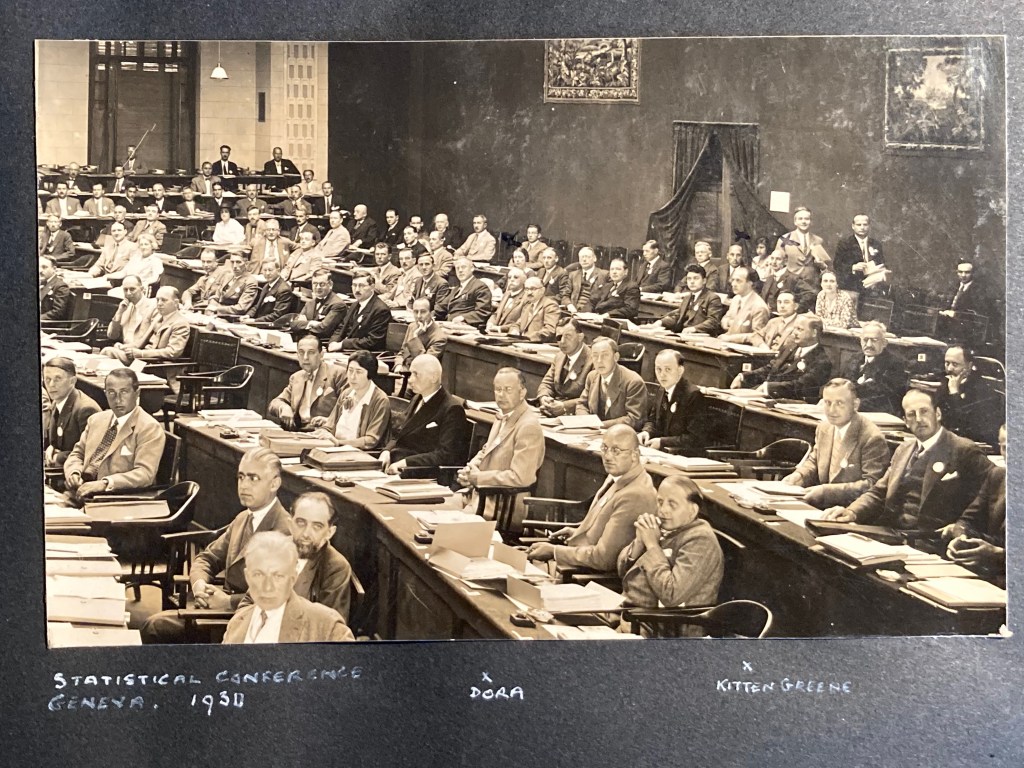
The forerunner of the United Nations was the League of Nations. I knew that Dora had attended a conference in Geneva in 1930, hosted by the League of Nations, but I have only just found out the details. It was a conference convened by the International Management Institute on the new science of Budgetary Control in business. One of the pioneers in the field was James McKinsey, who founded McKinsey Consulting in 1926, and he was due to lead a discussion on “the budget as an aid to determination of policy,” but did not attend at the last moment. It seems incredible to us now that budgeting had only just become a thing!
Budgeting was defined as “not merely control; it is not merely forecasting; it is an exact and rigourous analysis of the past, and the probable and desired future experience with a view to substituting considered intention for opportunism in management.”
Budgetary Control Conference, Geneva, July 1930
Dora’s cousin, Everard Greene, (known in the family as Kitten, he is seated under the white square in the pic) presented a paper on “The relationship of tabulating machines to budgetary control.” These were two innovations coming together. He argues that prior to the First World War there was a long period when demand and supply were in balance and so budgetary control was unnecessary. The war disrupted the system and afterwards some industries faced an excess of supply over demand, while others faced the opposite.
This prompted the development by the Americans of the concept of budgetary control. Tabulating machines had been invented in the USA in the 1880s, principally to mechanise the census. As with all innovations, there was considerable resistance to these “new fangled business ideas” and this was inhibiting growth for both Everard at BTM and Dora’s CASS. Everard concludes:
“It seems obvious that those who are interested in budgetary control should investigate the possibilities of tabulating machines as a means of putting their ideas into effect, and in turn, those who are marketing tabulating machines should impress on their market the value of budgetary control.”
Dora was one of 200 delegates at the conference, but the only one representing Ireland and one of a handful of women present.
The National Portrait Gallery reopened this summer after a long period of closure. Among their opening exhibitions is Yevonde: Life and Colour. Yevonde Middleton (1893-1975) was a pioneering photographer, bringing colour to portrait photography in the 1930s and producing allegorical and surreal images. Her sitters including royalty, the rich, famous and my parents!
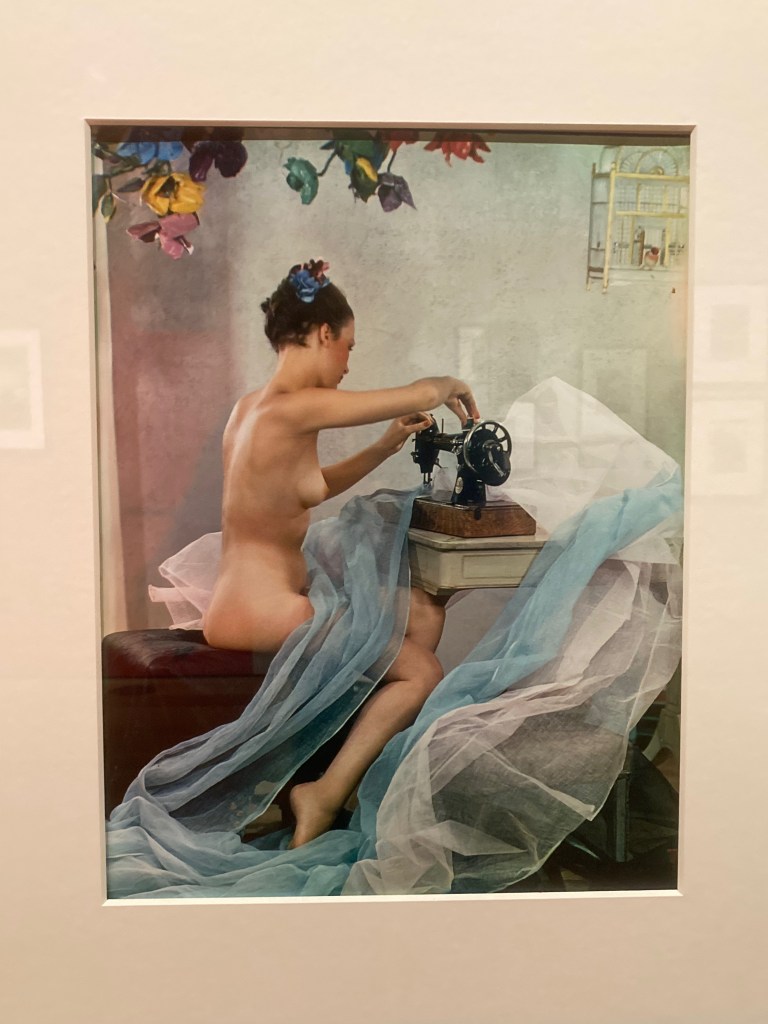
Yevonde was an ardent feminist and suffragist and many of her images betray her thoughts on the lot of women in the interwar years. I love that Nefertiti, the most beautiful woman who ever lived, is still obliged to do the ironing. The naked girl at a sewing machine combines eroticism and woman’s decorative qualities with the domestic and working dimensions of life. A bird sings in the background, perched at the open door of her cage. And woman’s best friend is her dog!
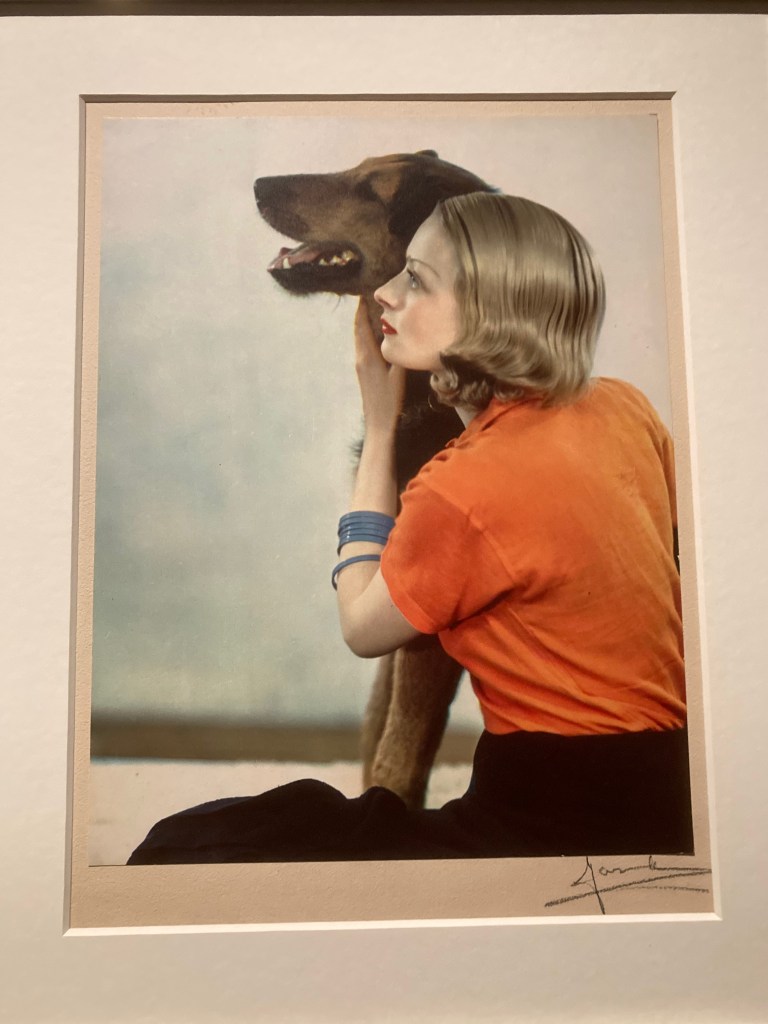
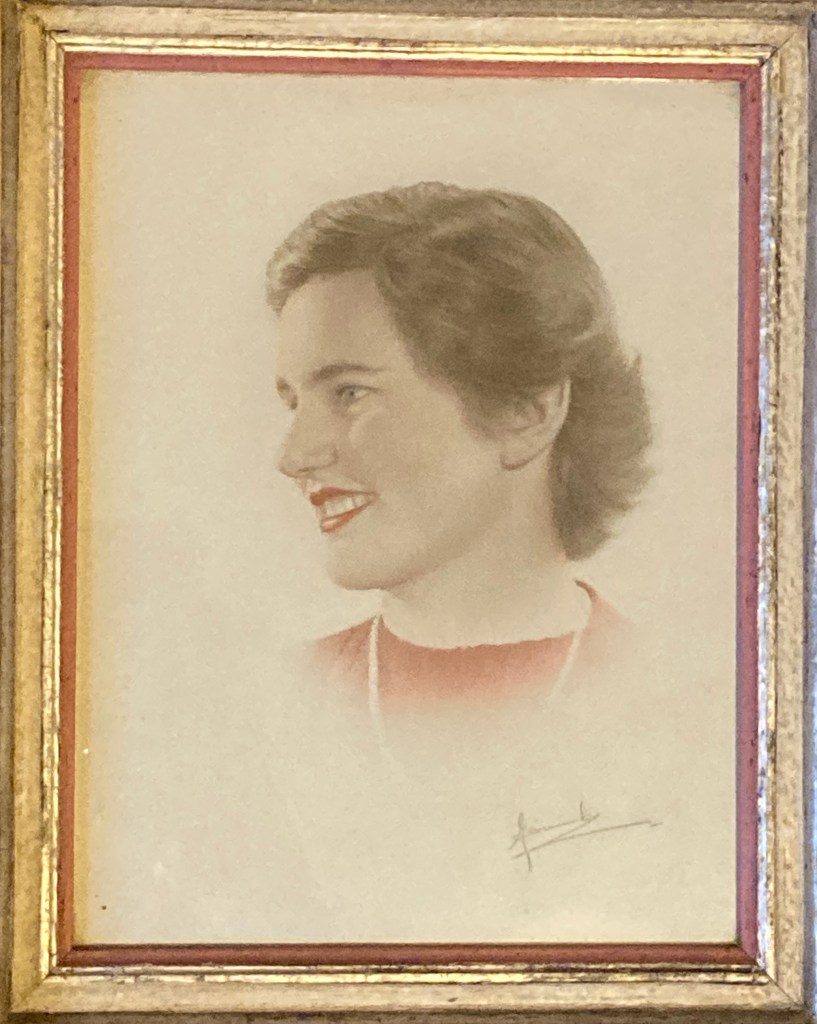
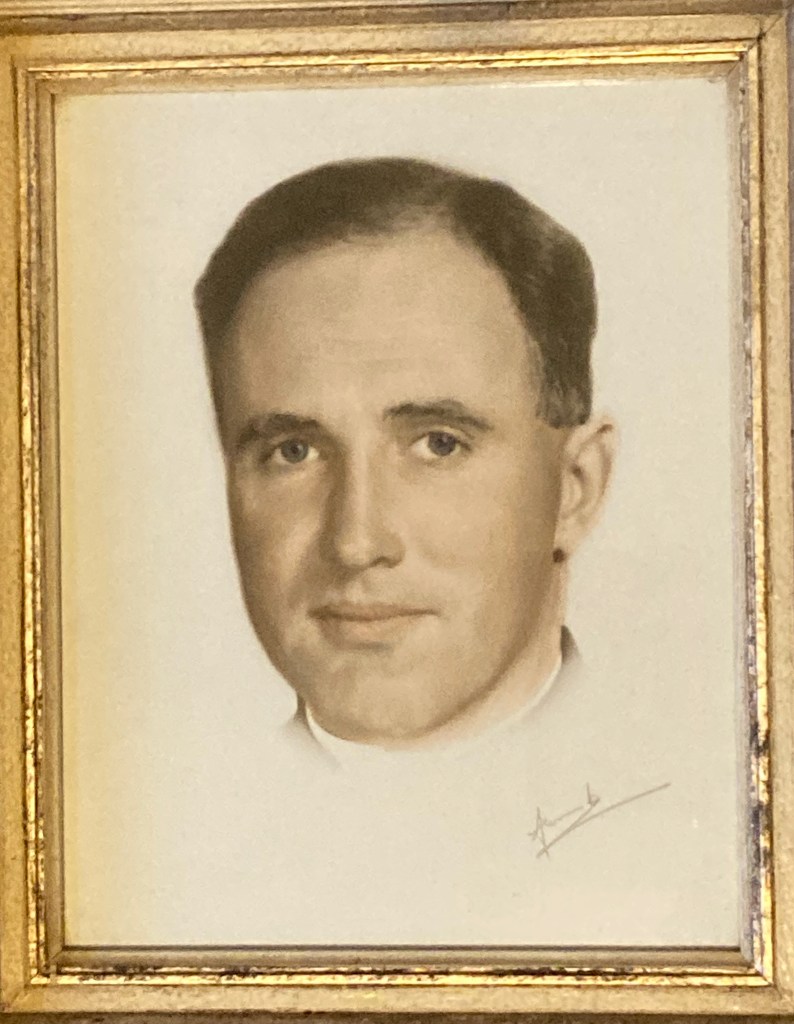
Yevonde was a member of the Women’s Provisional Club and a good friend of my great aunt Dora. Dora commissioned portraits of my parents as a wedding present to them in 1950. Yevonde tinted the original black and white photos, giving Mum red lipstick and a red sweater – Yevonde’s favourite colour. She must have framed the prints too, giving a red tint to the inner section.
For Dad she used softer tones. I think he looks rather handsome!
The Yevonde exhibition is wonderful, highly recommended, but it ends soon, 15 October 2023, so hurry or you will miss it!
March is the month of Dora’s birth, International Women’s Day and Women’s History month. The UN theme for IWD 2023 is “DigitALL – innovation and technology for gender equality.”
It seems appropriate to celebrate Dora, a tech pioneer who employed an almost exclusively female staff in her information services business, CASS. From the start of the 20th century, it was women who used the new technology – typewriters, telephones and calculating machines. In 1916, Dora’s Comptometer operators were all women. In the 1920s, when Dora added electro-mechanical tabulators to her business, the operators were all women. She brought in female statisticians, mathematicians and eventually programmers. Men were happy to be engineers, but their focus was on developing hardware and servicing the machines. Women used the machines and analysed the data, and it was Dora, a trained mathematician, who was the innovator, finding new applications for how the machines could be used in businesses and government departments.
In was only at the very end of her career, in the 1960s, that men started to encroach into the field of computing. The machines were no longer clerk substitutes with their operators suffering low status, low pay and no career progression. The electronic era and the introduction of programming gradually transformed computing into a career of importance. Apparently too skilled for the women who had been working in the field for years, a shift that follows the ‘boys and their (mechanical) toys’ trope. Sadly, the shift has never reversed, with men still dominating the computing industry. According to the UN, “women’s exclusion from the digital world has shaved $1 trillion from the gross domestic product of low- and middle-income countries in the last decade—a loss that will grow to $1.5 trillion by 2025 without action.”
I was fortunate to be awarded a place at the Tyrone Guthrie Centre in Ireland. It’s an artists’ retreat, with studios for artists, printmakers, photographers, dancers, composers and songwriters, and lovely rooms for writers. It is a big old country house, surrounded by woodland and with a lake at the foot of the lawn.
Dawn at Tyrone Guthrie Centre
It was heaven to have a whole week to write, uninterrupted by the necessities of daily life. Perfect timing too, as a publisher to whom I had submitted my manuscript asked me to tweak the story, saying they liked it and would look at it again if I redrafted it. So I delved deep into Dora’s life and worked hard to make her story more immediate, rich in texture and immersive.
I especially enjoyed being in Ireland to do this work. Dora spent her life between Belfast and Dublin and TGC is close to the border, in County Monaghan. I was in the excellent company of some fun and creative Irish people, being treated to generous Irish hospitality. There is an augmentation effect when a group of people are all engaged in similar work, a sort of entrainment of the energies. It made it a very productive time.
I was delighted to see a report in The Guardian that a statue to Lady Rhondda is to be unveiled in Newport, South Wales. I was intrigued to find out who had commissioned it, a group called Monumental Welsh Women. This inspiring group of activists are working on five statues commemorating Welsh Women, including Elaine Morgan, author of The Aquatic Ape; Elizabeth Andrews, political activist for women’s rights; Cranogwen, master mariner and poet; and Betty Campbell, the first black headmistress in Wales.
Lady Rhondda was one of the founders of the Women’s Provisional Club and would have been well known to Dora. In fact, it may be that it was in Geneva in 1930 that they first met, before Dora joined the WPC. Dora was there with Everard Greene for a statistical conference at the International Labour Organisation and met Ethel Wood, co-founder of the WPC, who was probably there on Six Point Group business with Lady Rhondda and Helen Archdale. They were campaigning for the League of Nations to sign an Equal Rights Treaty for women.
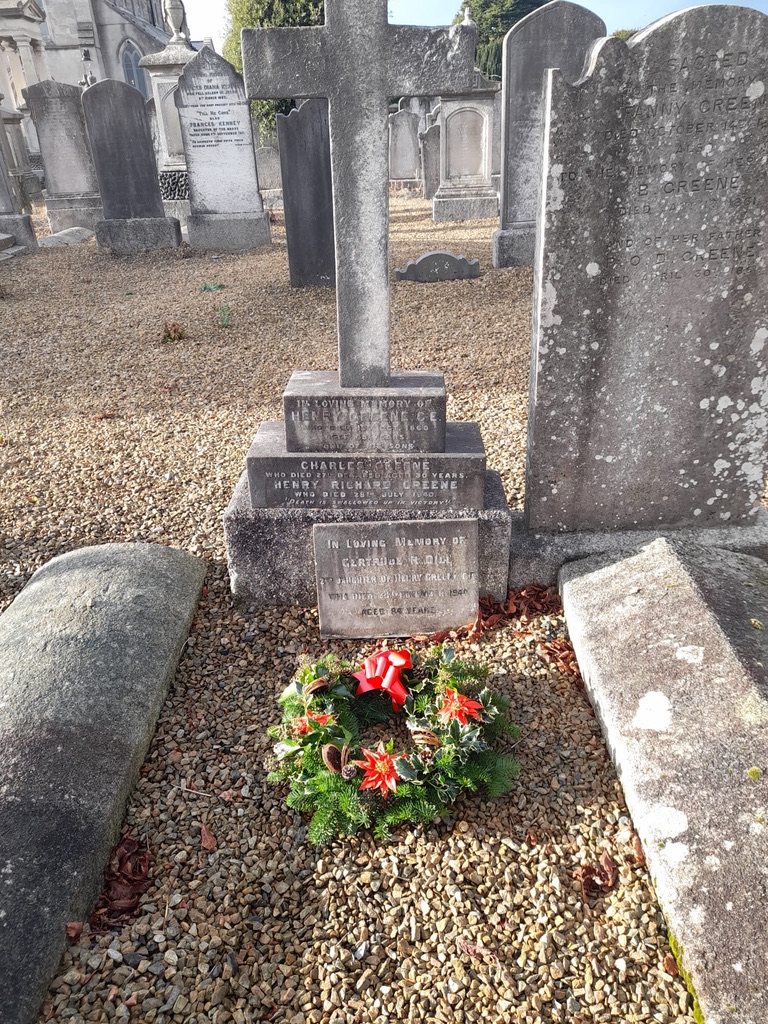
My cousin in Ireland has just sent me a picture of a wreath that she has put on the Greene family grave in Mount Jerome cemetery, resting place of Henry William (Dora’s grandfather), Henry R, Charles and Gertrude, all uncles and aunts. I’m so pleased that their lives are being remembered at Christmas. Thankyou Sandra and Merry Christmas to everyone!













 A Bitter Equation